Sophie Stratyner
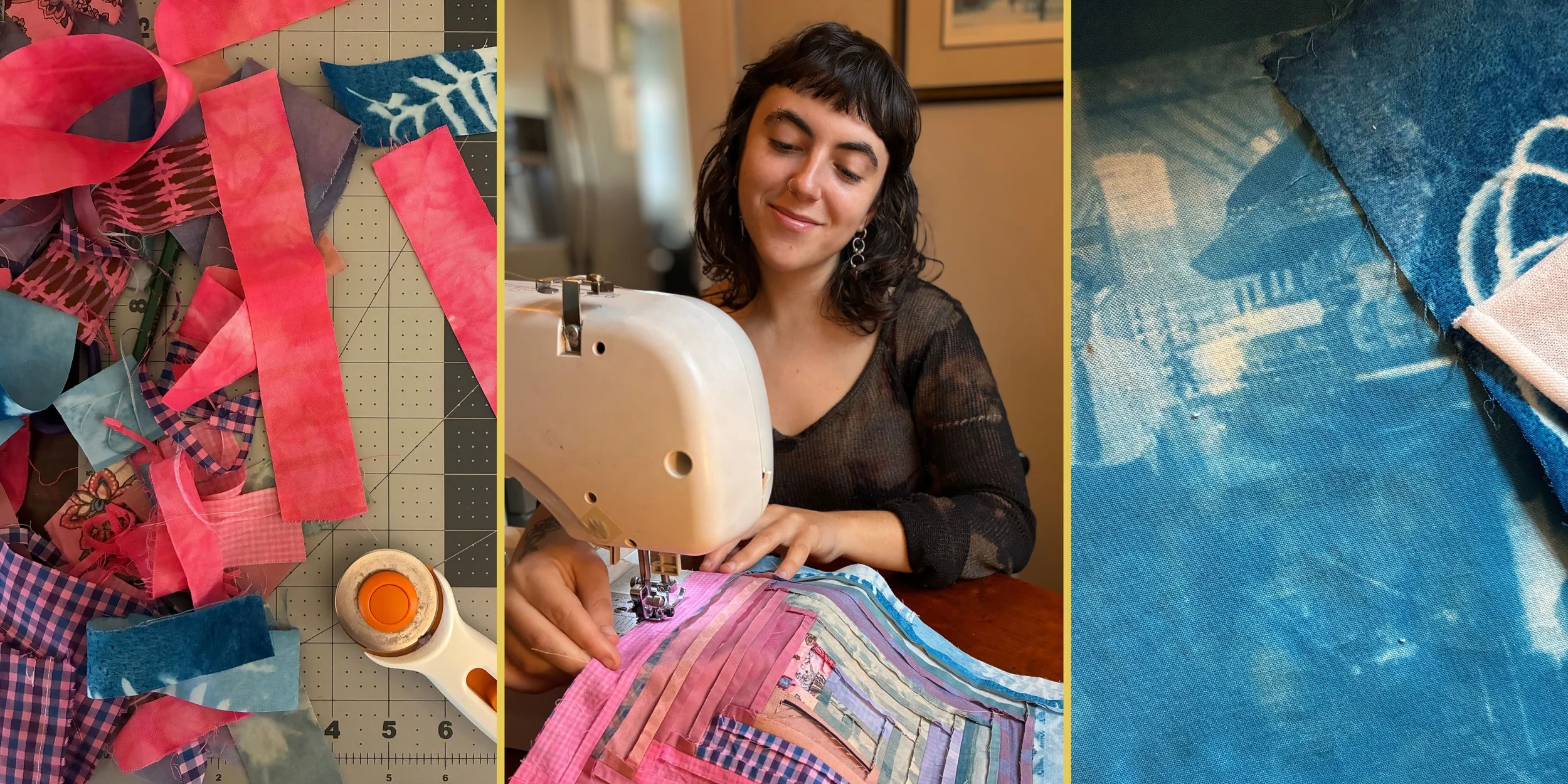
Project Overview
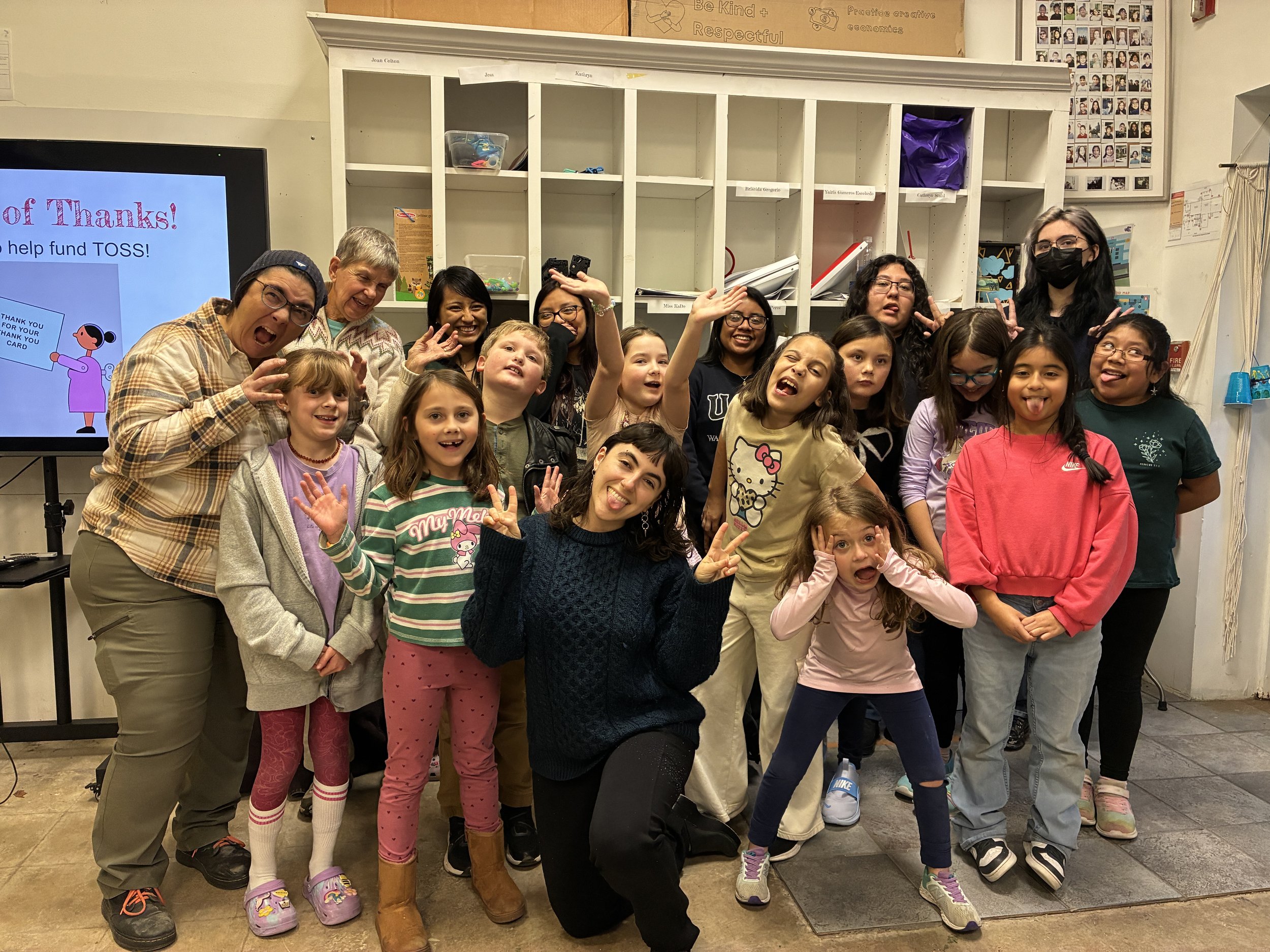
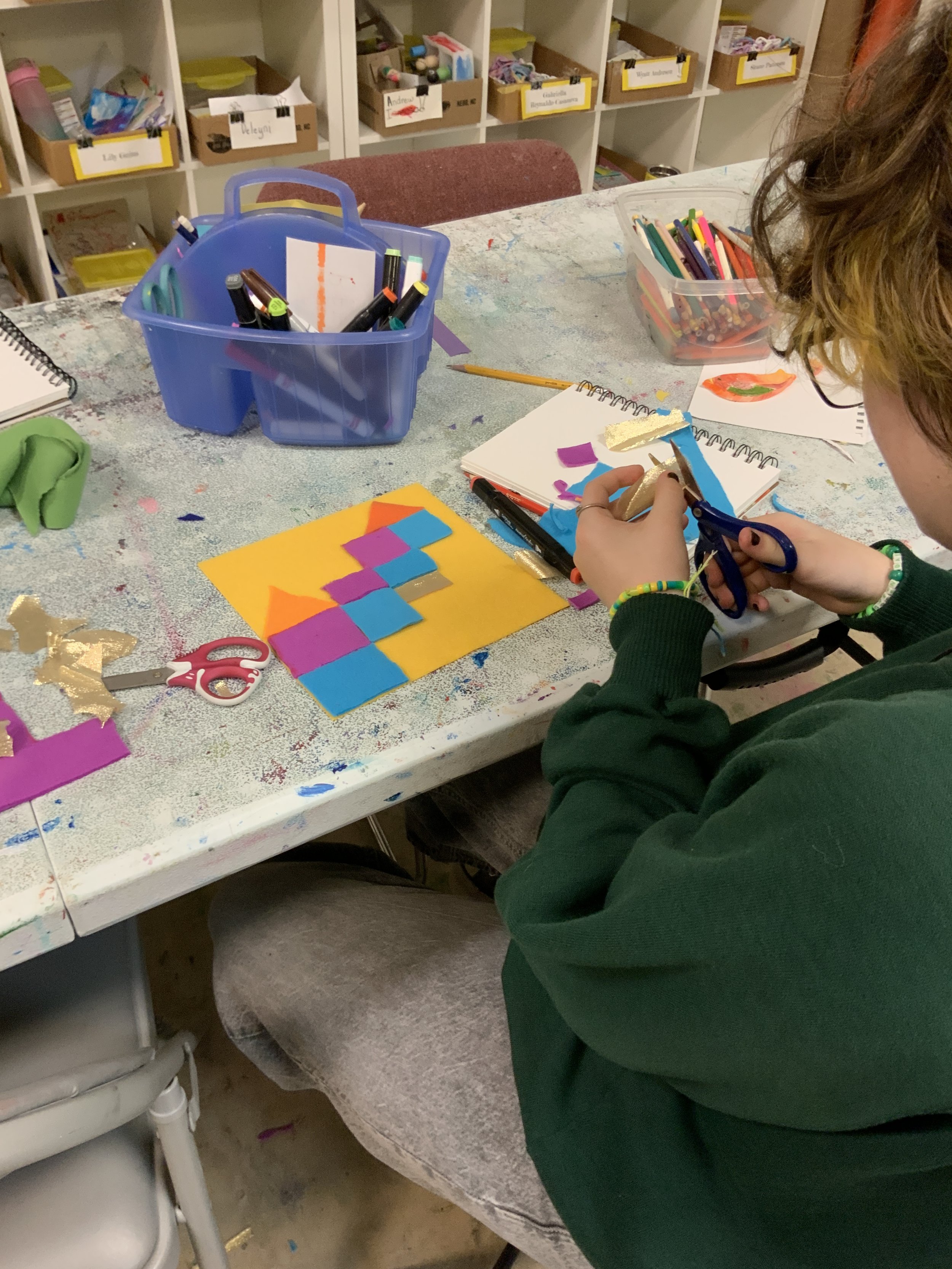
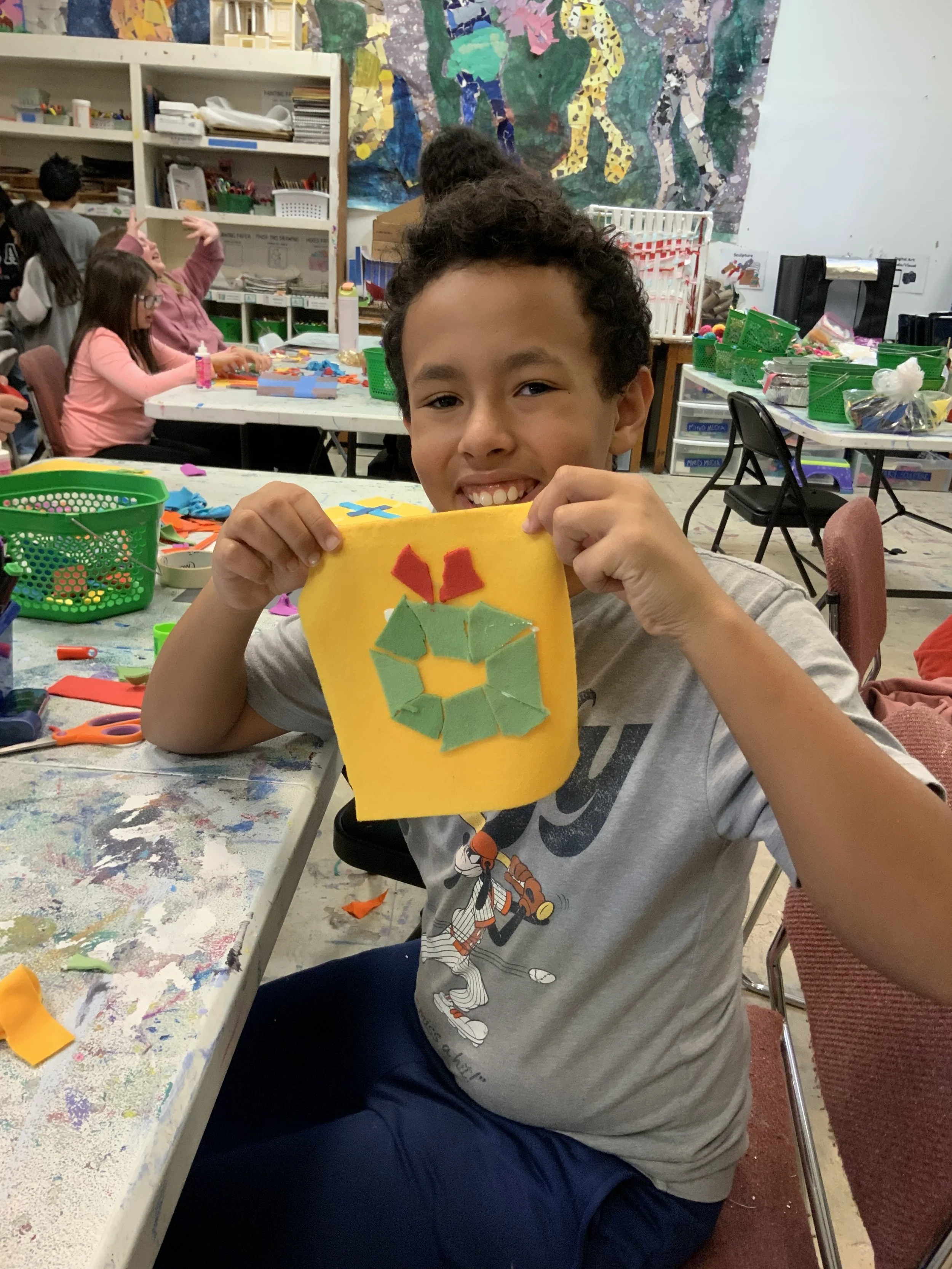
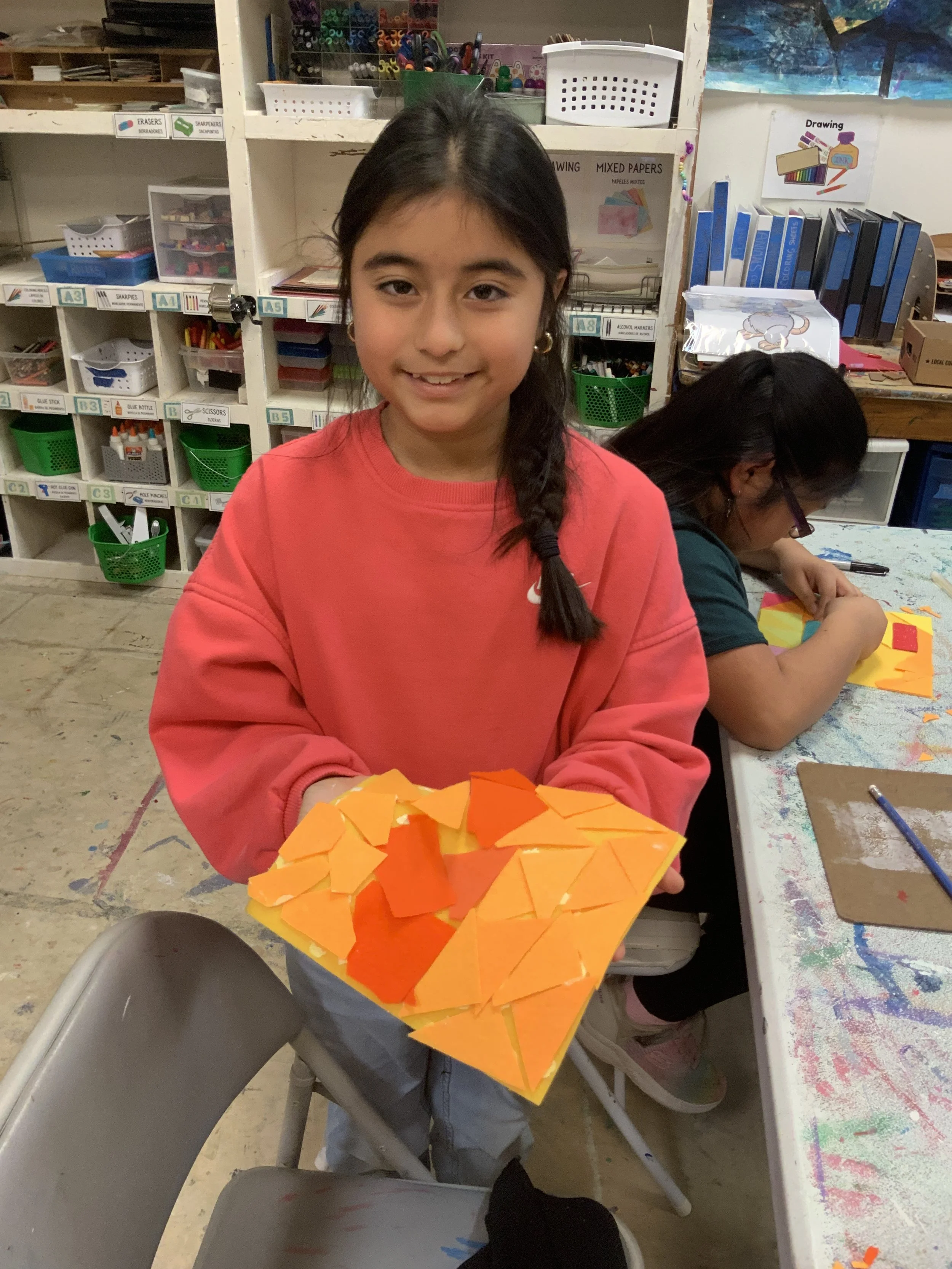
Over the course of four weeks in winter of 2025, Sophie Stratyner created 5 works of art, in collaboration with our ecosystem partner, Material Return. She worked with students in the TOSSafter program through a 4 day workshop and her art in now in the permanent collection of The Industrial Commons.
Artist Bio
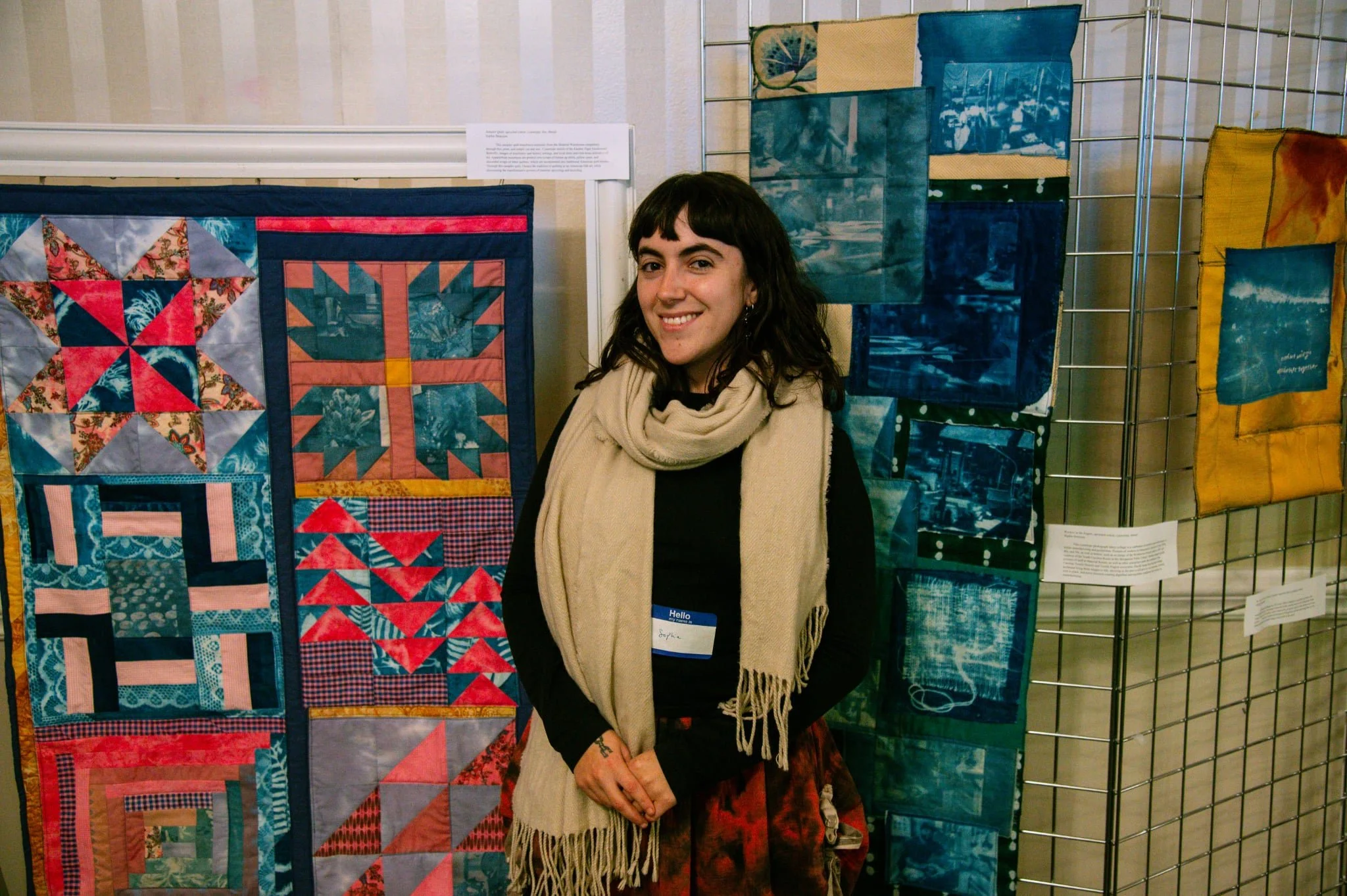
Sophie at her exhibition in Downtown Morganton
December 9th, 2025
Sophie is a fiber artist and art teacher based in Upstate New York whose work explores sustainability, circularity, and the future of fiber systems in America. With a background in costume design for theater, Sophie became deeply aware of the challenges in the global fiber/clothing supply chain and has since dedicated her practice to reviving regional and sustainable fiber systems.
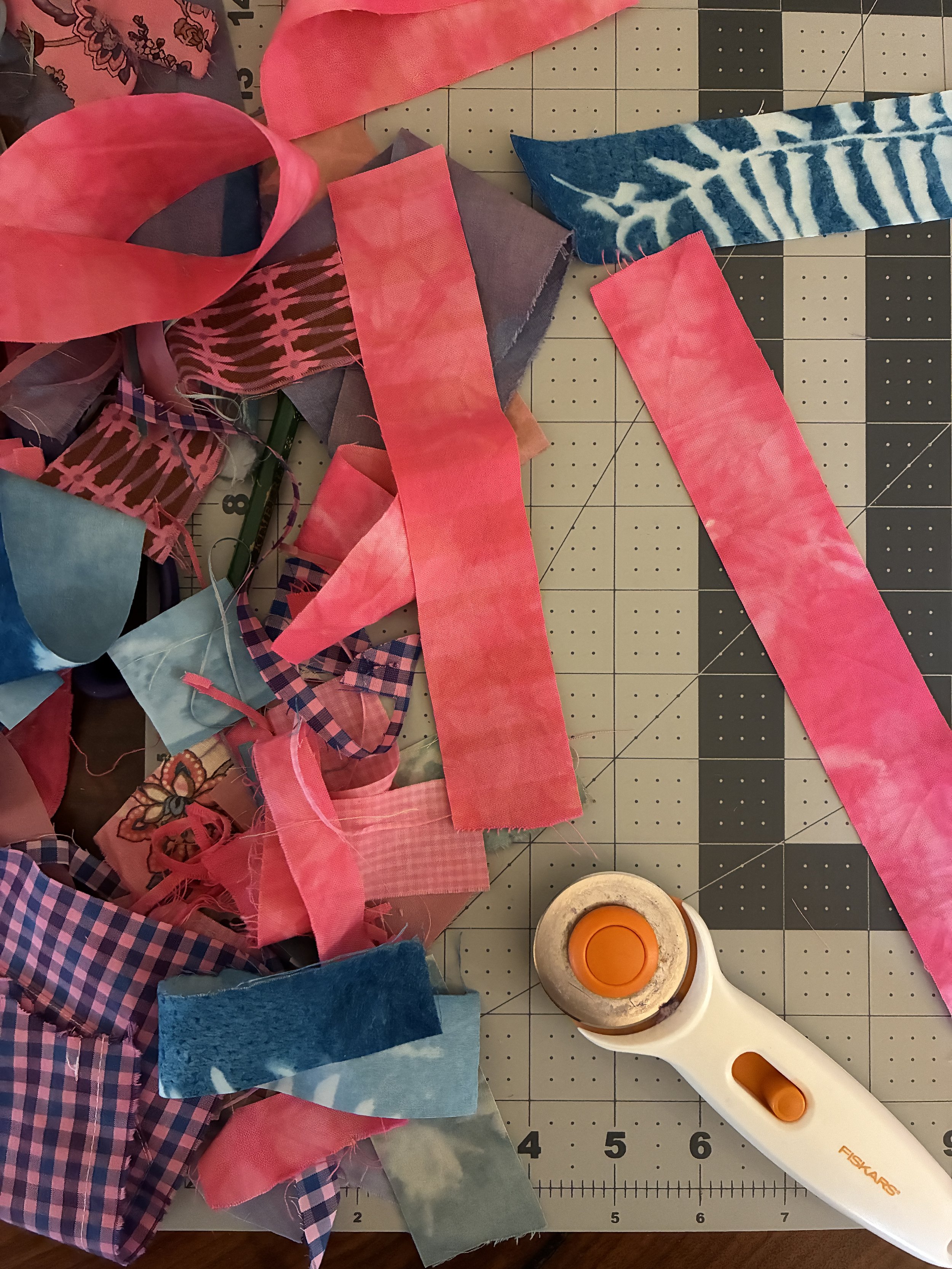
Her art practice blends quilting, printmaking, dyeing, and book arts - often using natural dyes, upcycled fabrics, and downcycled materials. Sophie has shared her work through residencies at Alchemy Art Center and Pillow Fort Arts Center, and she’s taught creative workshops ranging from cyanotype printing to eco-dyeing to soft bookmaking.
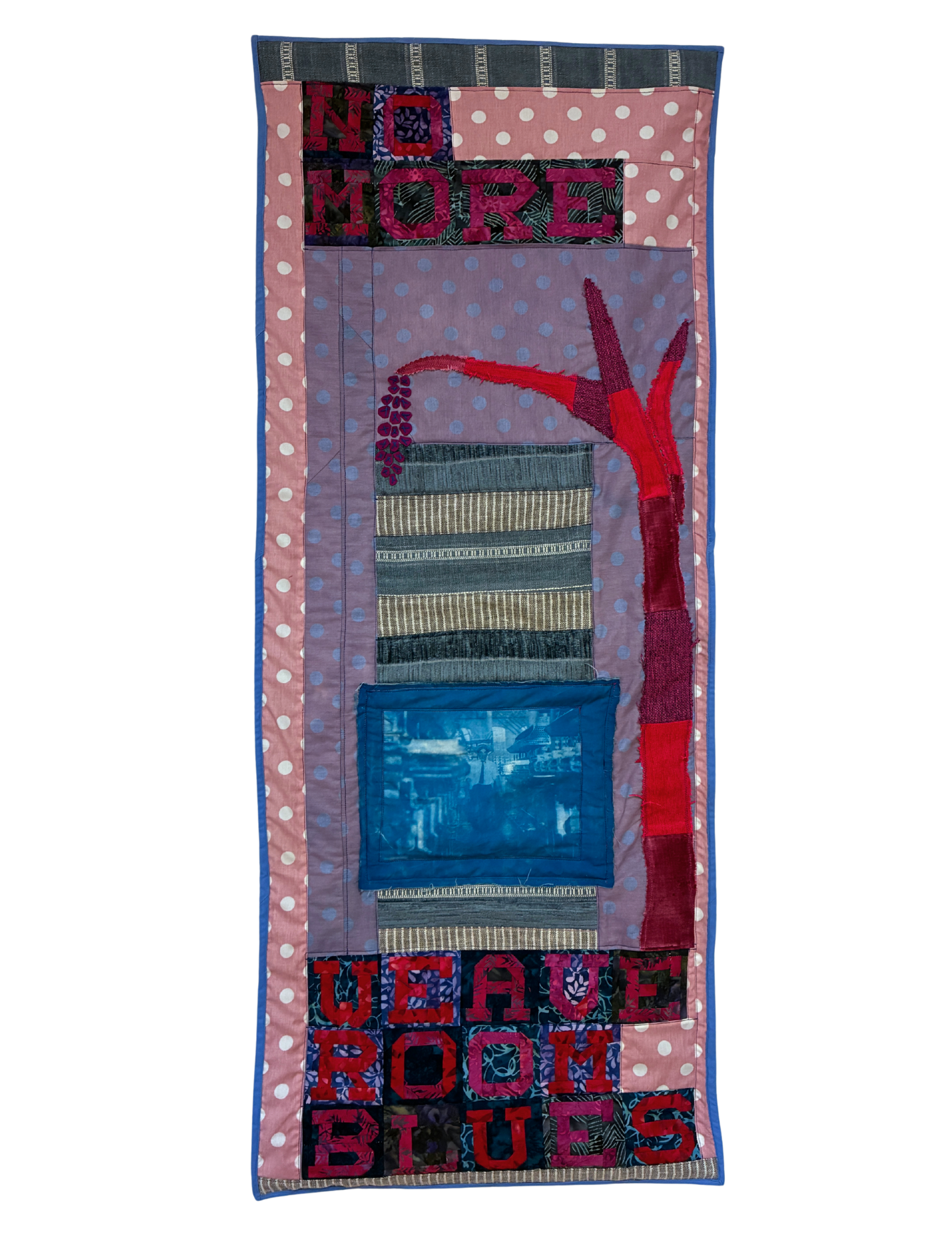
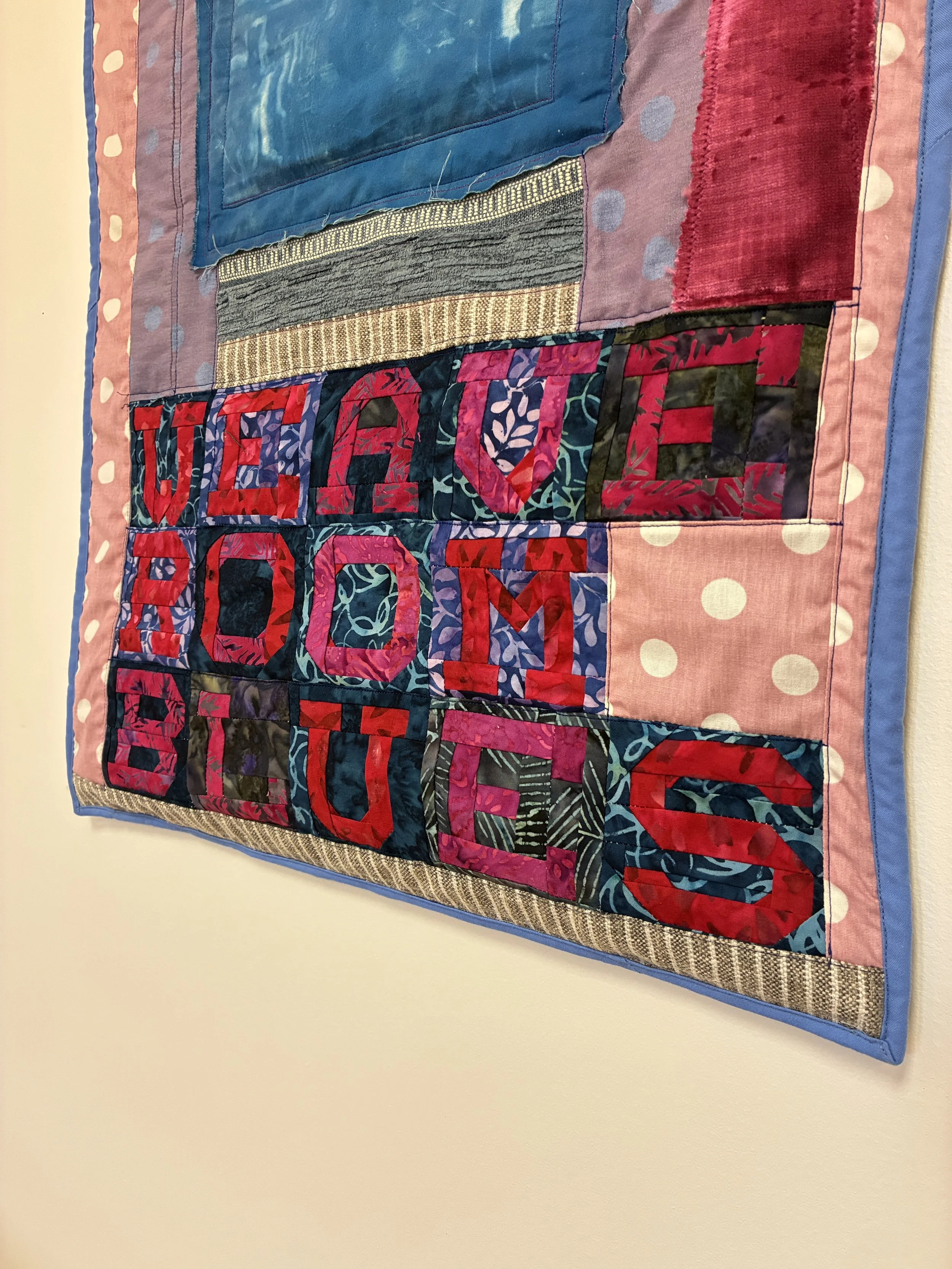
No More Weave Room Blues,
Upcycled cotton, cyanotype, thread
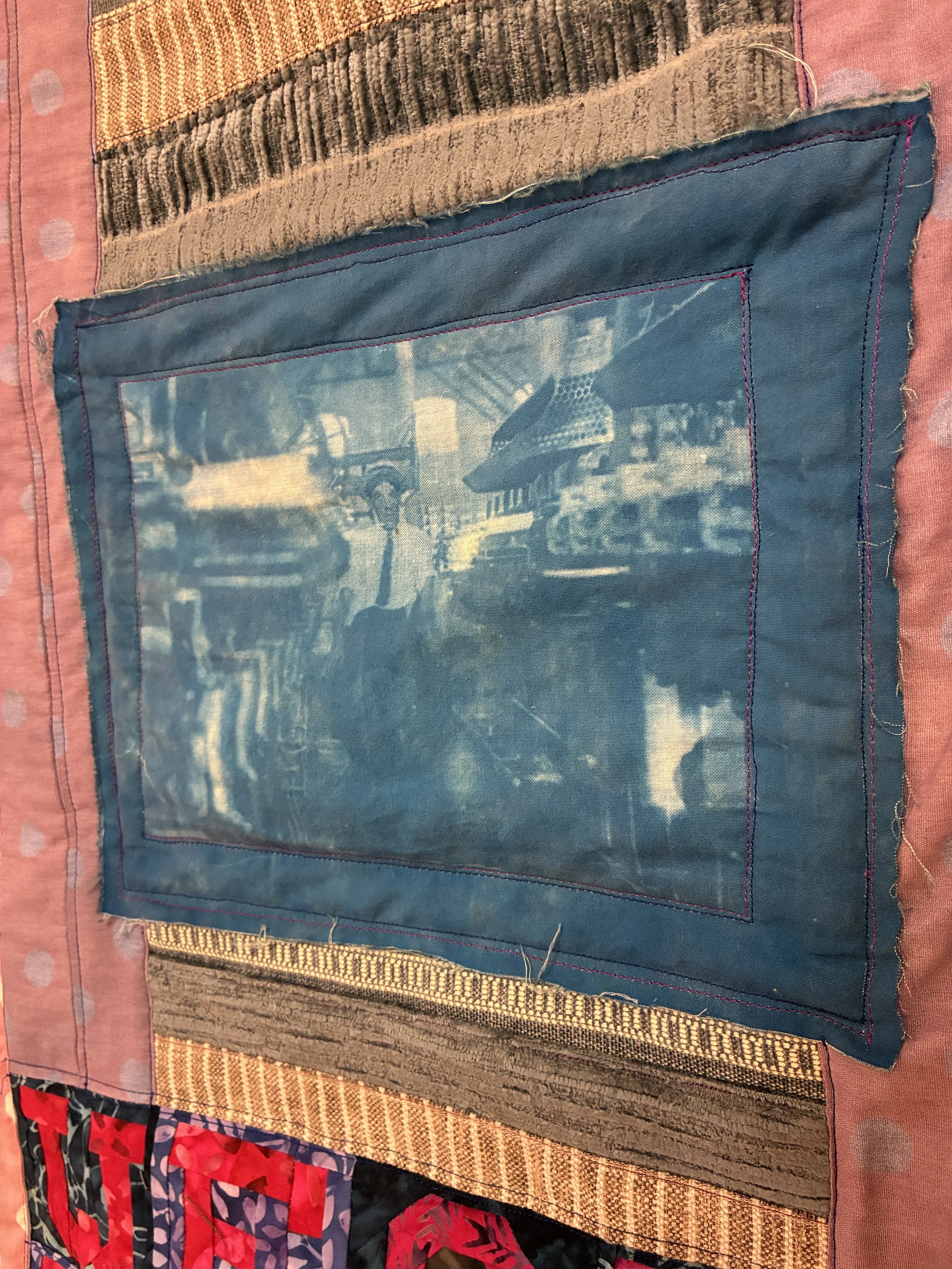
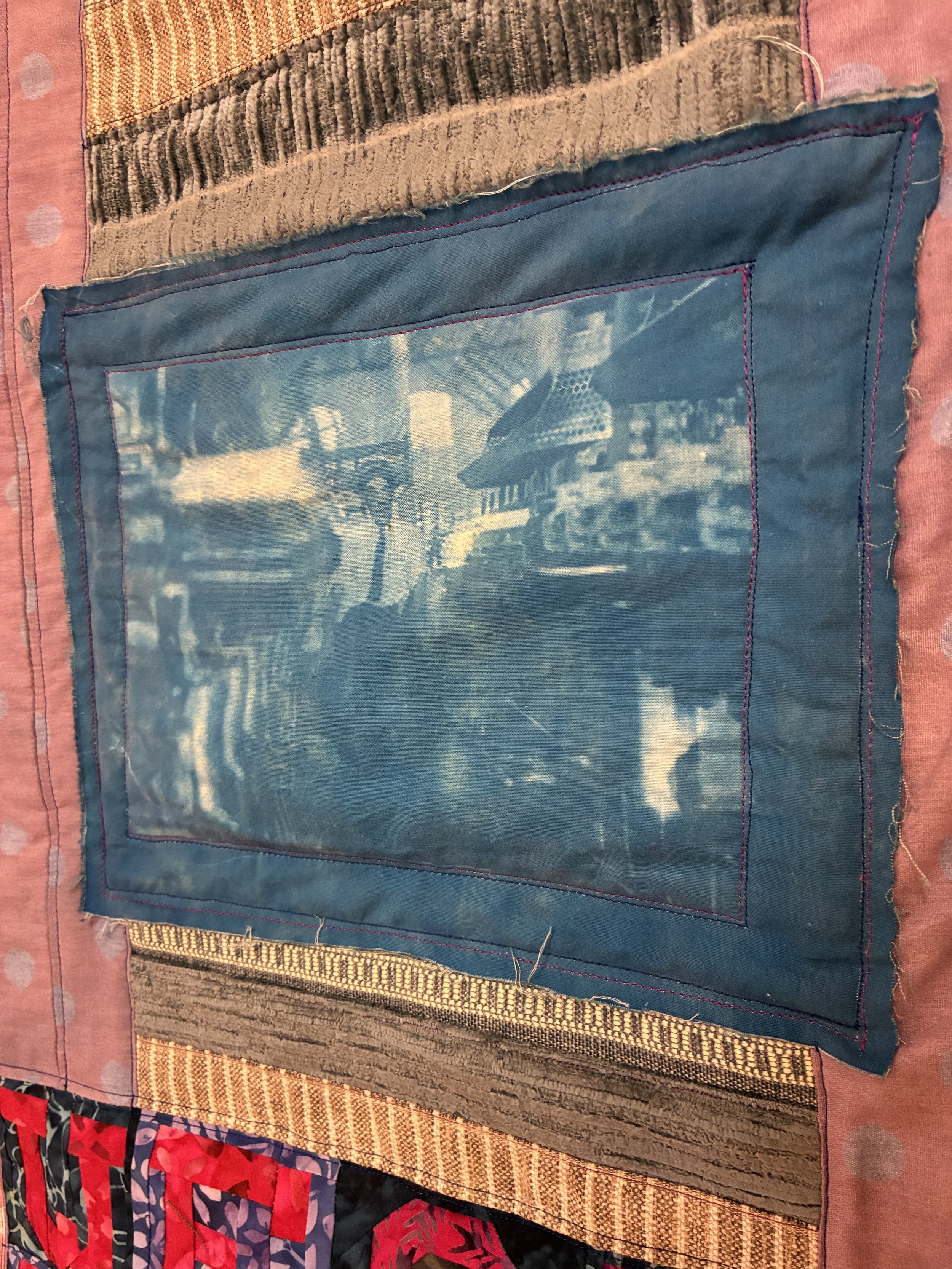
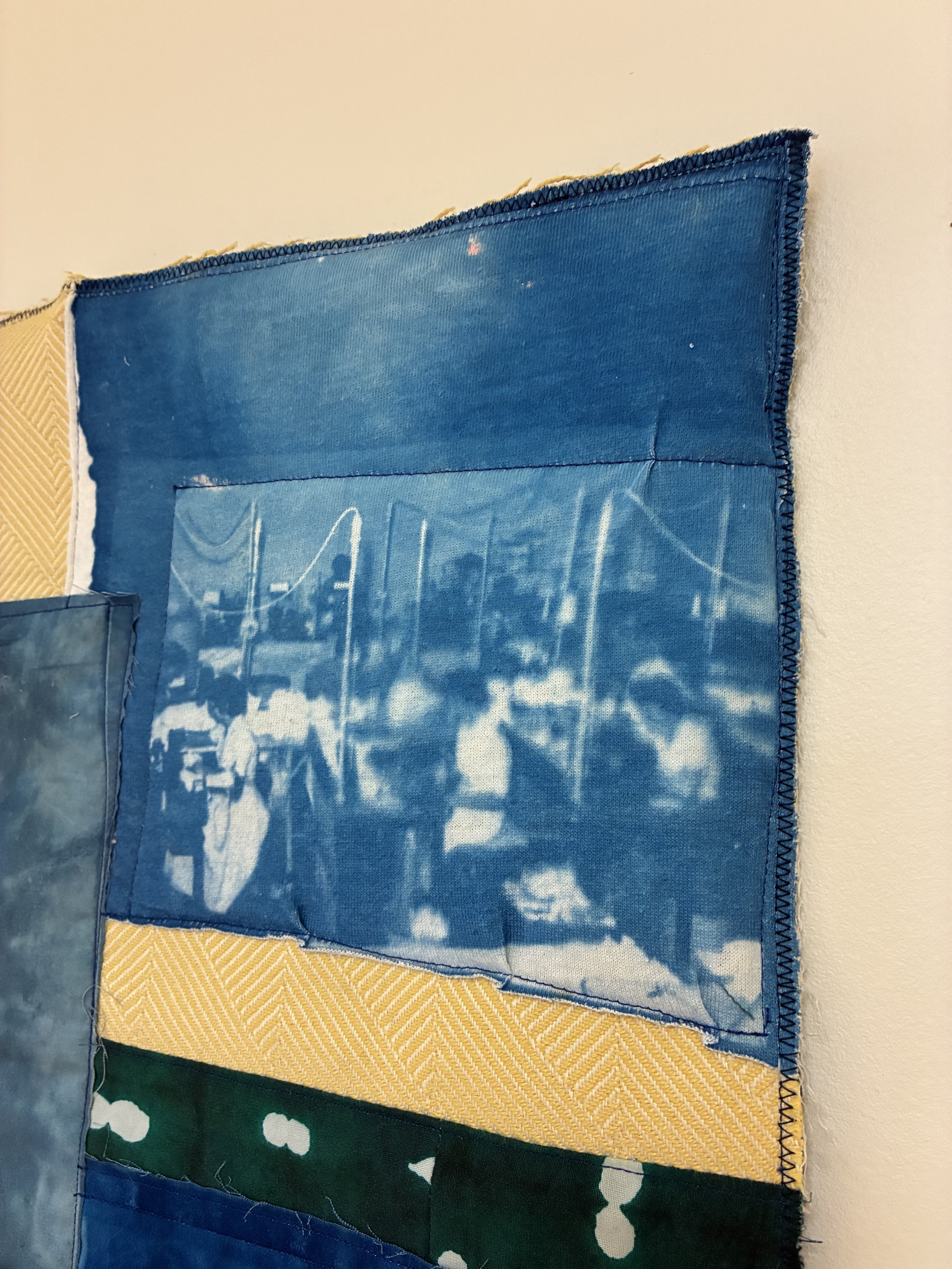
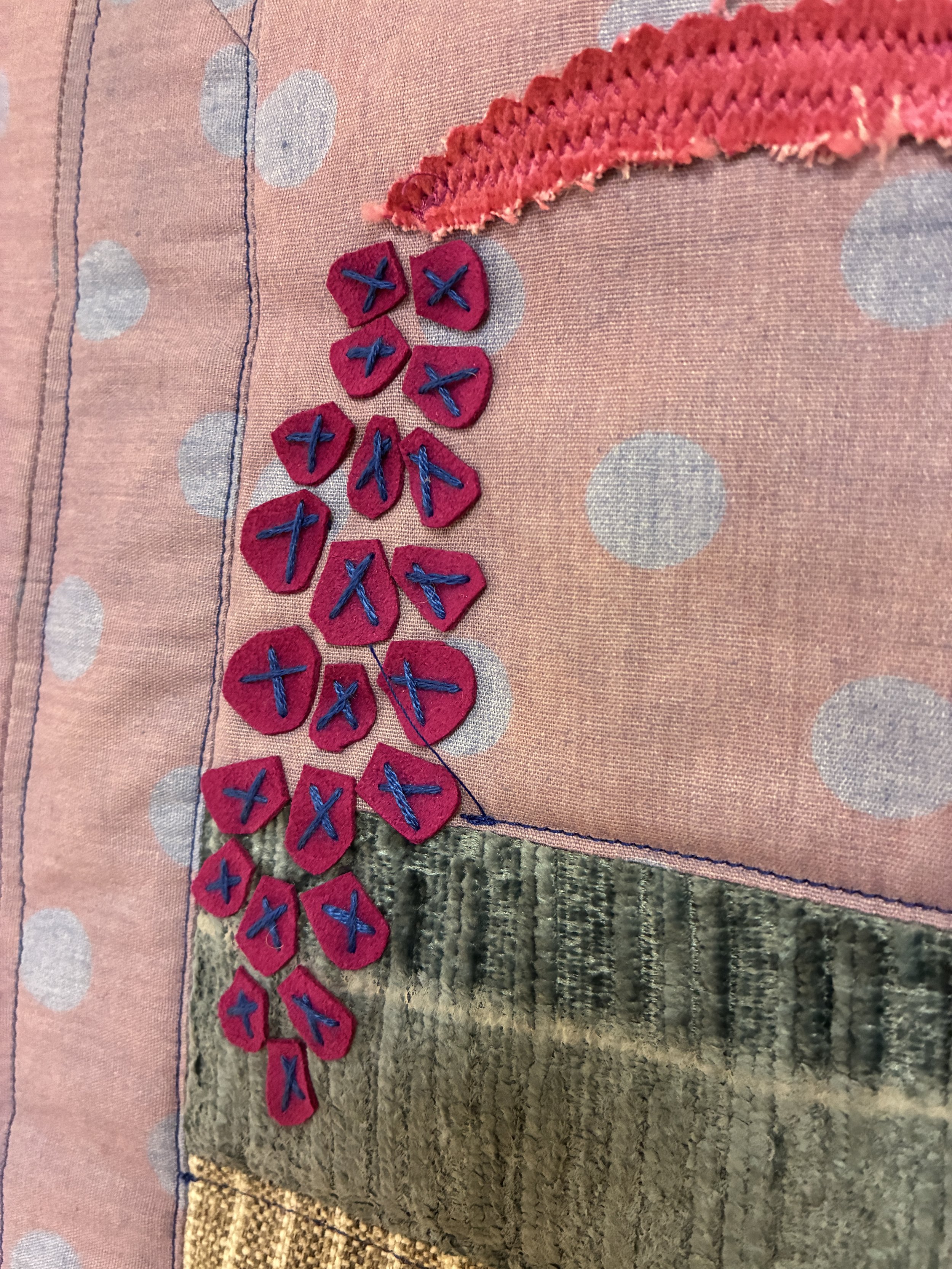
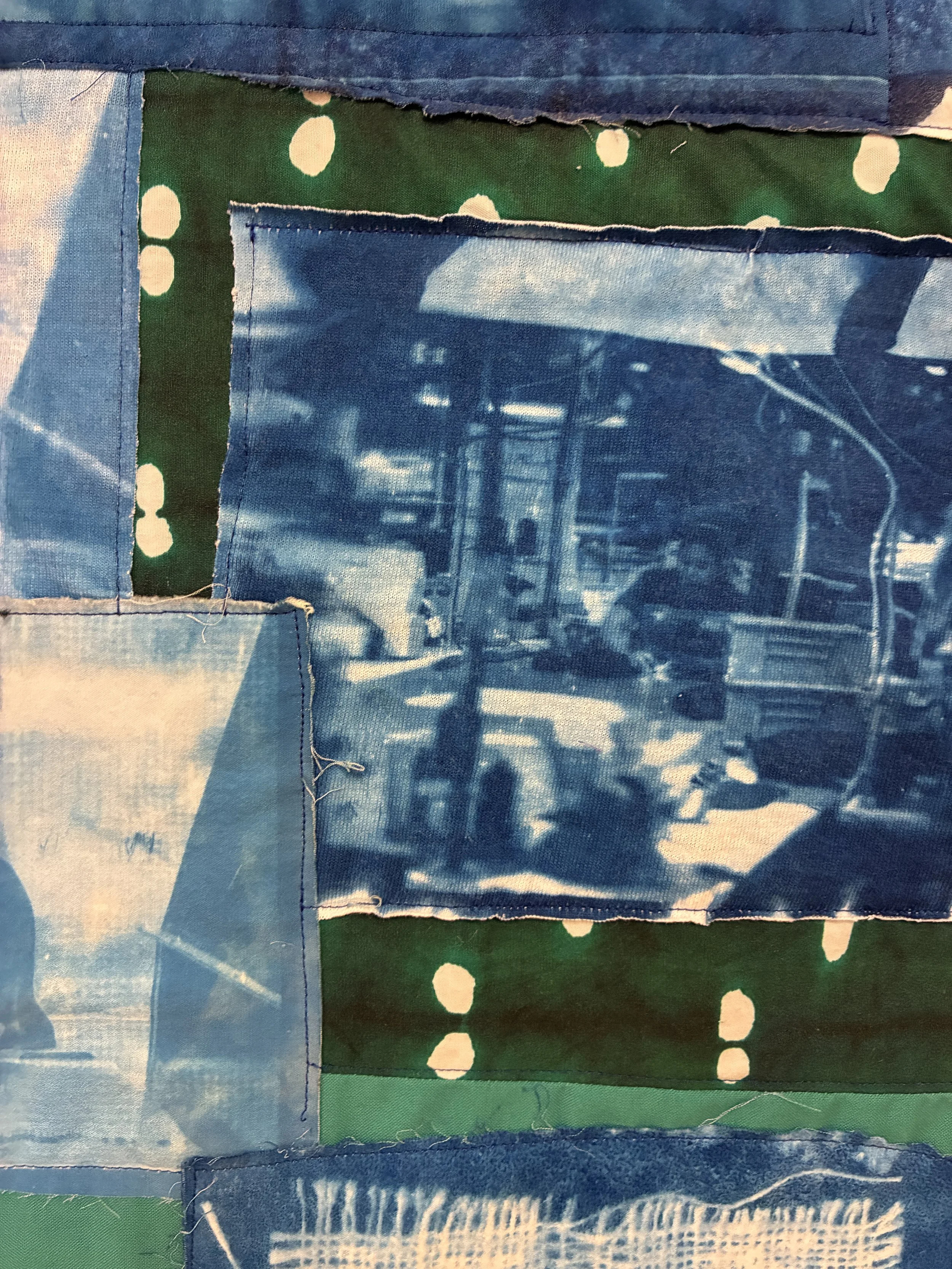
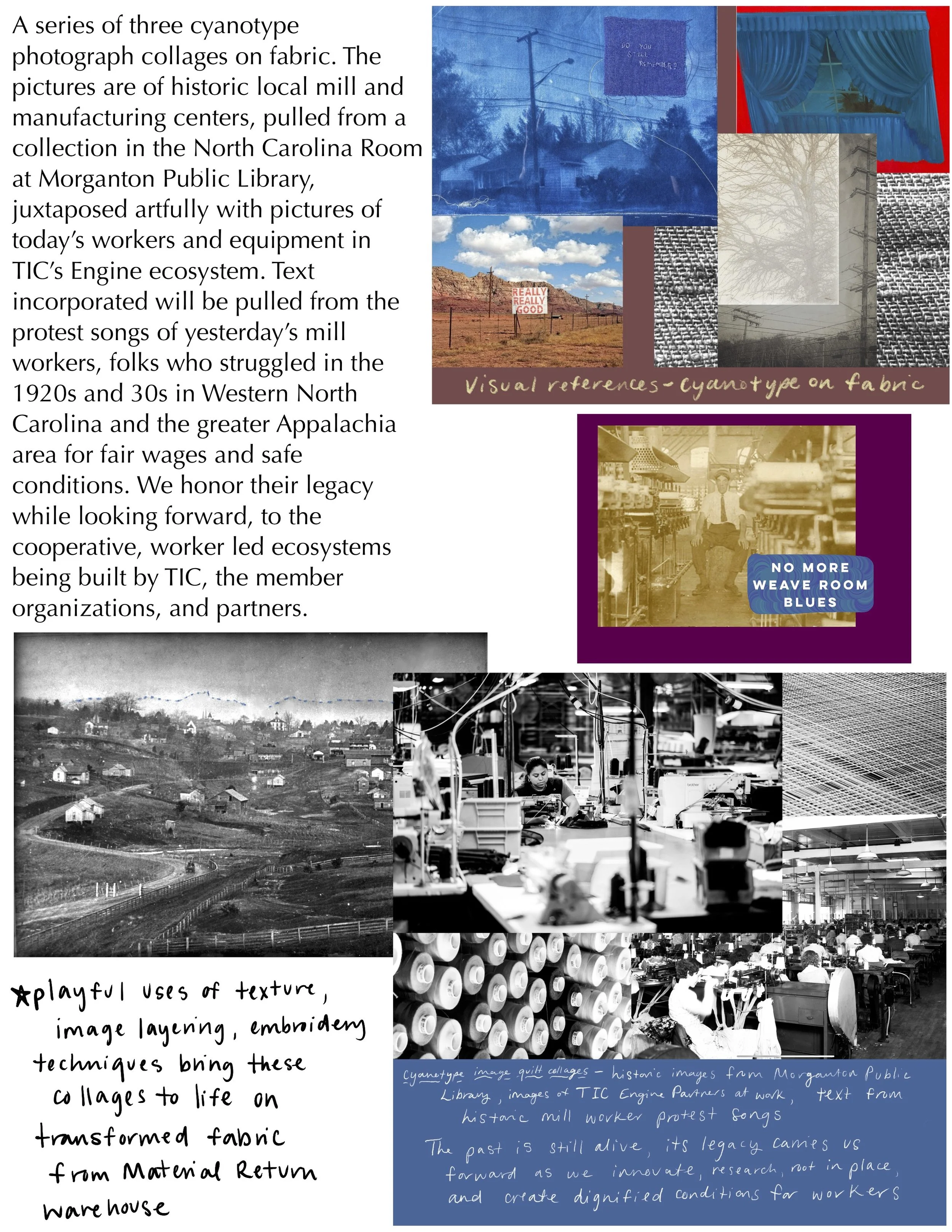
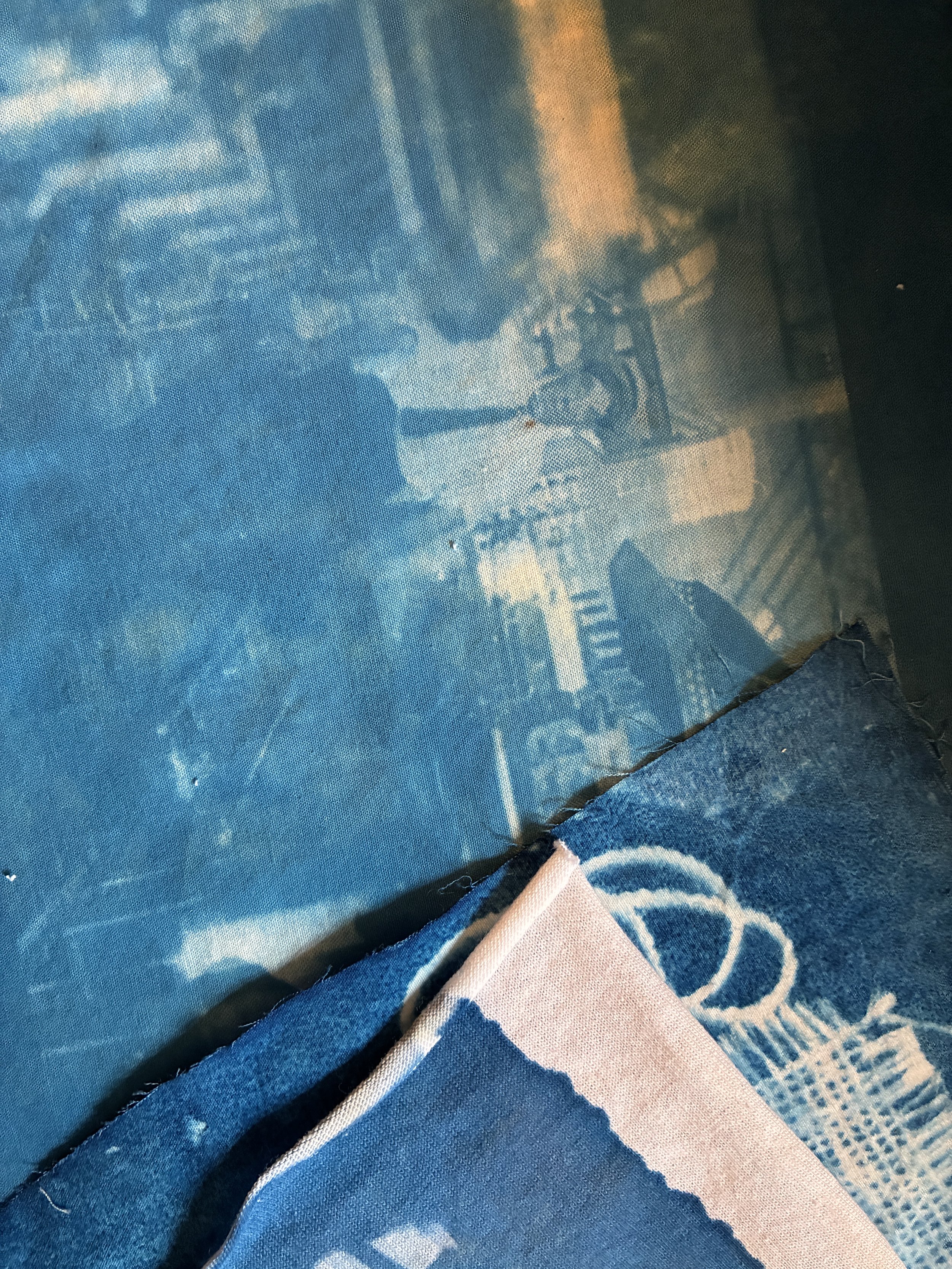
Being in the Western North Carolina piedmont in the late fall and early winter, one of the only plants with color left is pokewood, with its vibrant pink stalk, yellowing leaves, and dark blue berries still hanging. The resilience of the pokeweed is akin to the resilience of Western North Carolina’s textile workers, who fought terrible working conditions in the strikes of the 1920s and 30s. This photograph, rendered here on cotton through cyanotype, is of a man working in the weave rooms of Burke County, and comes from the North Carolina Room at the Morganton Public Library. The text, “No More Weave Room Blues” is an homage to the song “Weave Room Blues” by the Dixon Brothers, released in 1932 while Dorsey Dixon worked at a fabric plant where he ran sixteen looms at once. Today, the Industrial Commons pushes for worker led, equitable manufacturing, insuring there will be no more weave room blues.
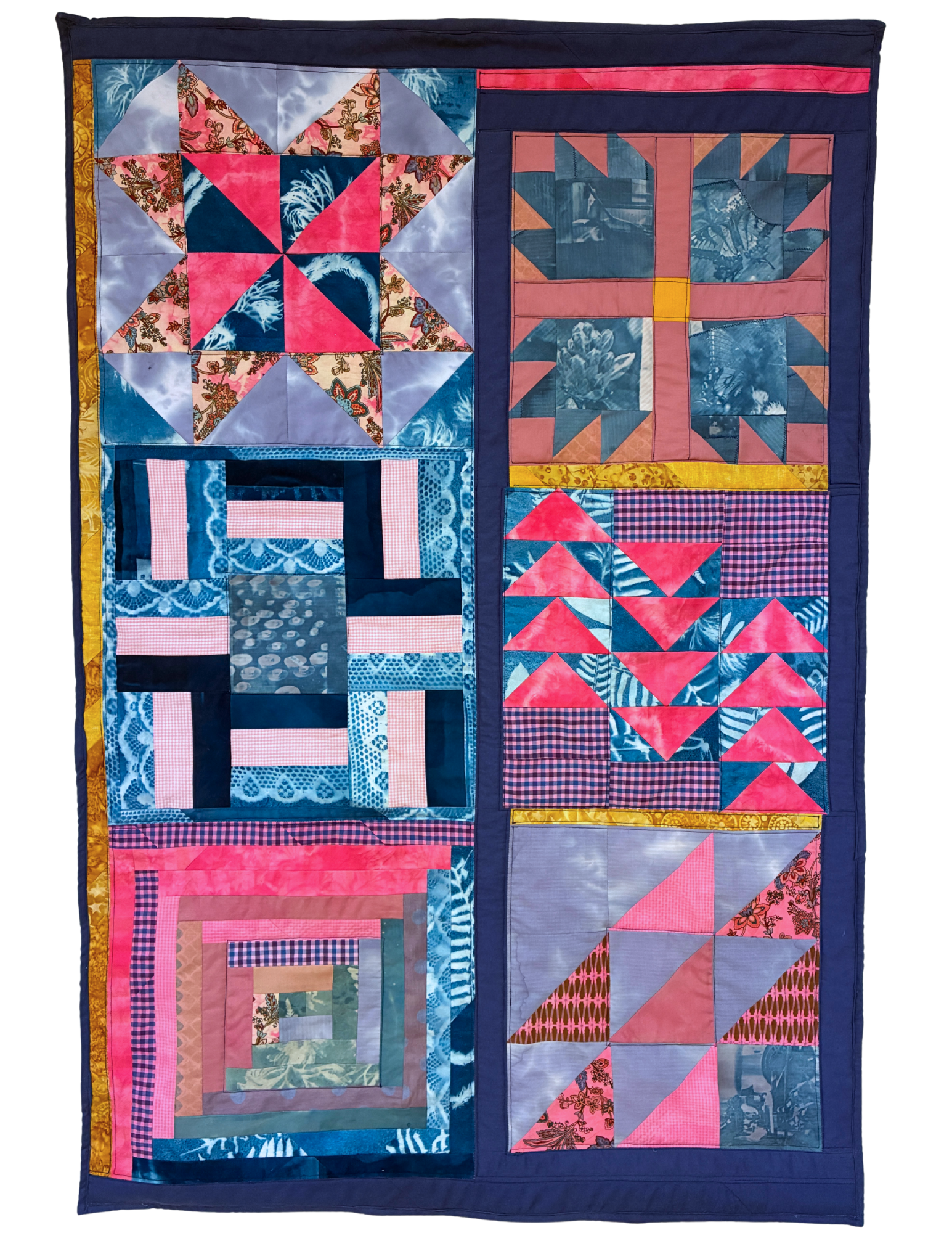
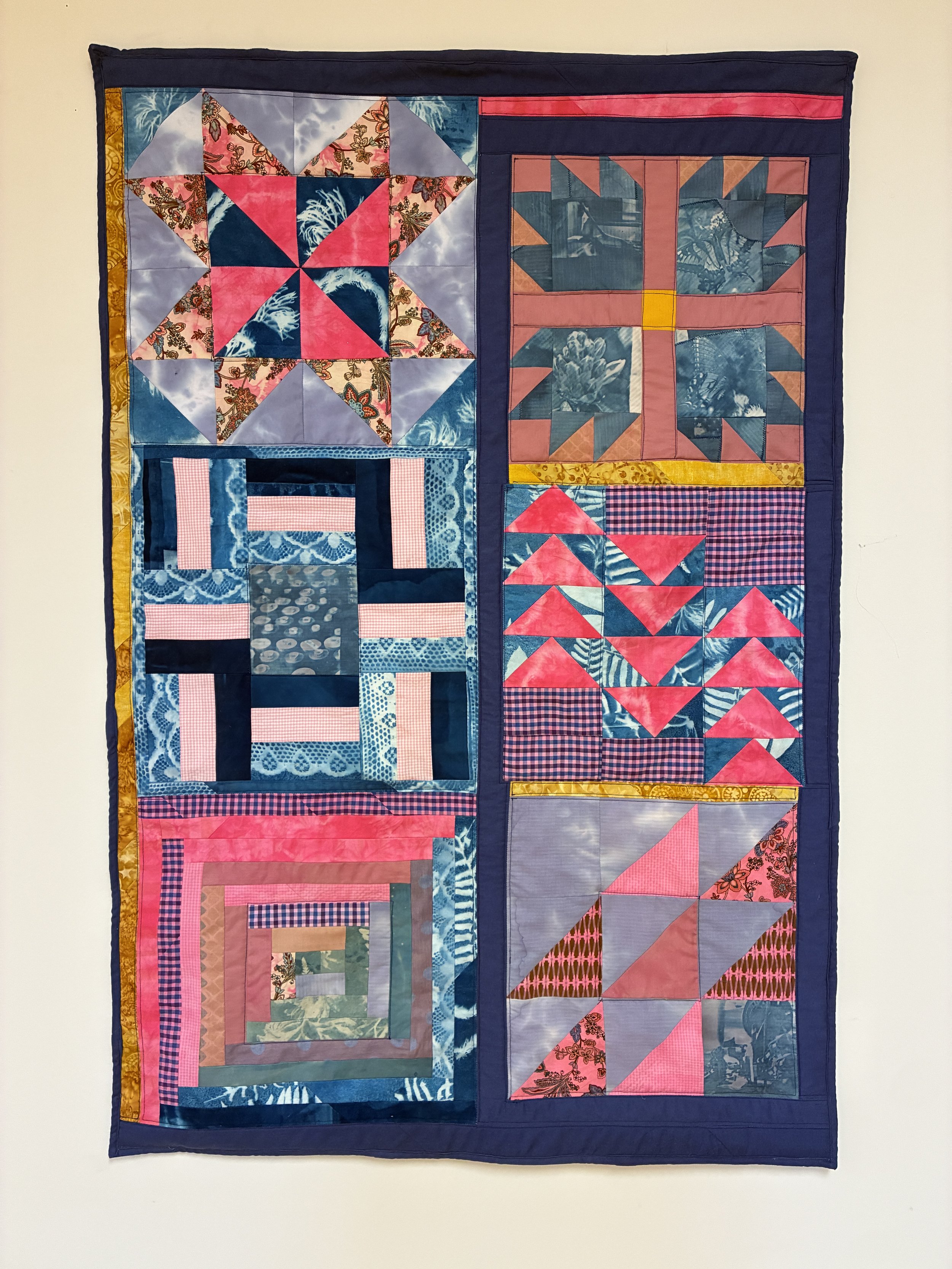
Sampler Quilt
Upcycled cotton, cyanotype, dye, thread
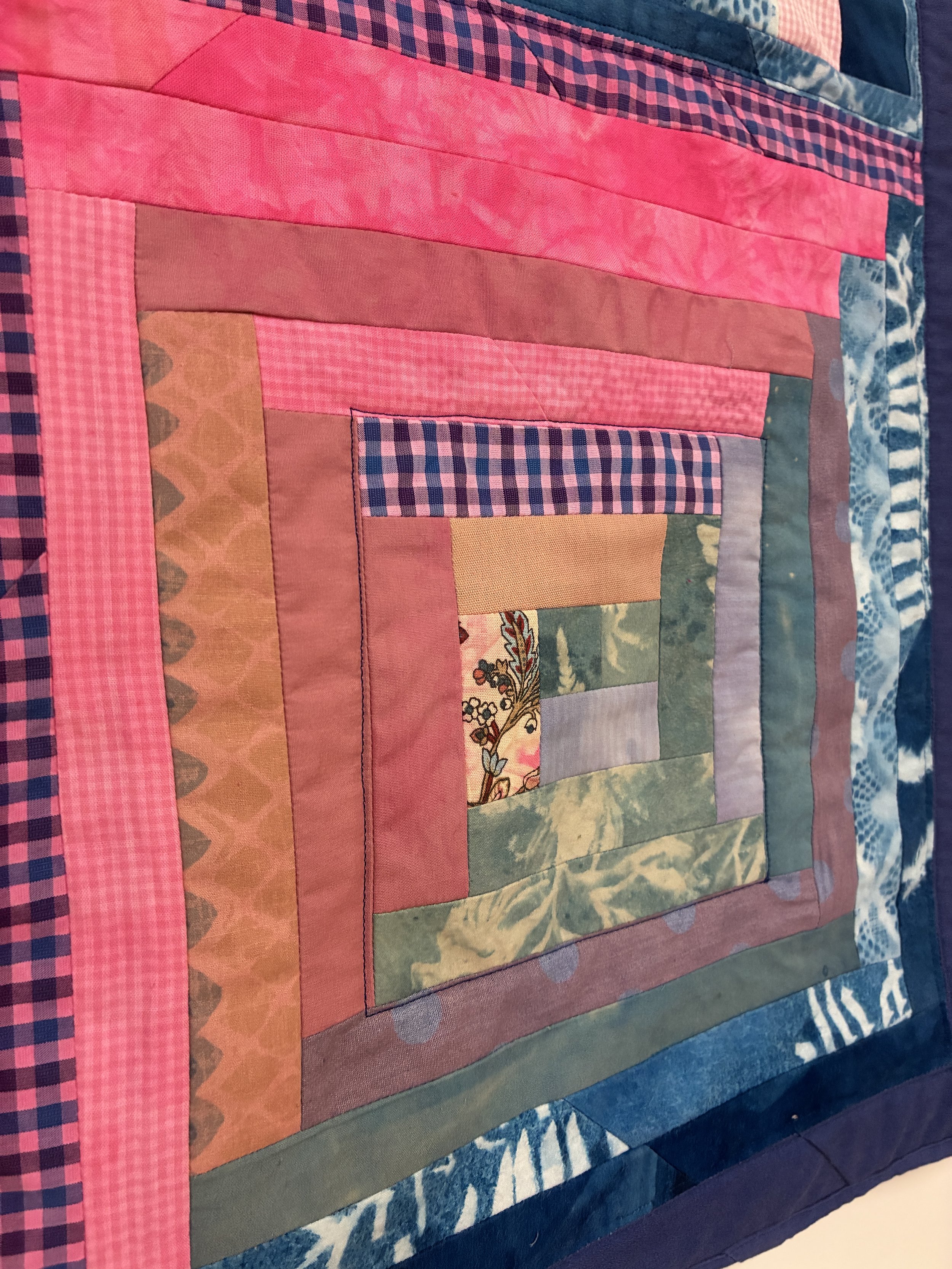
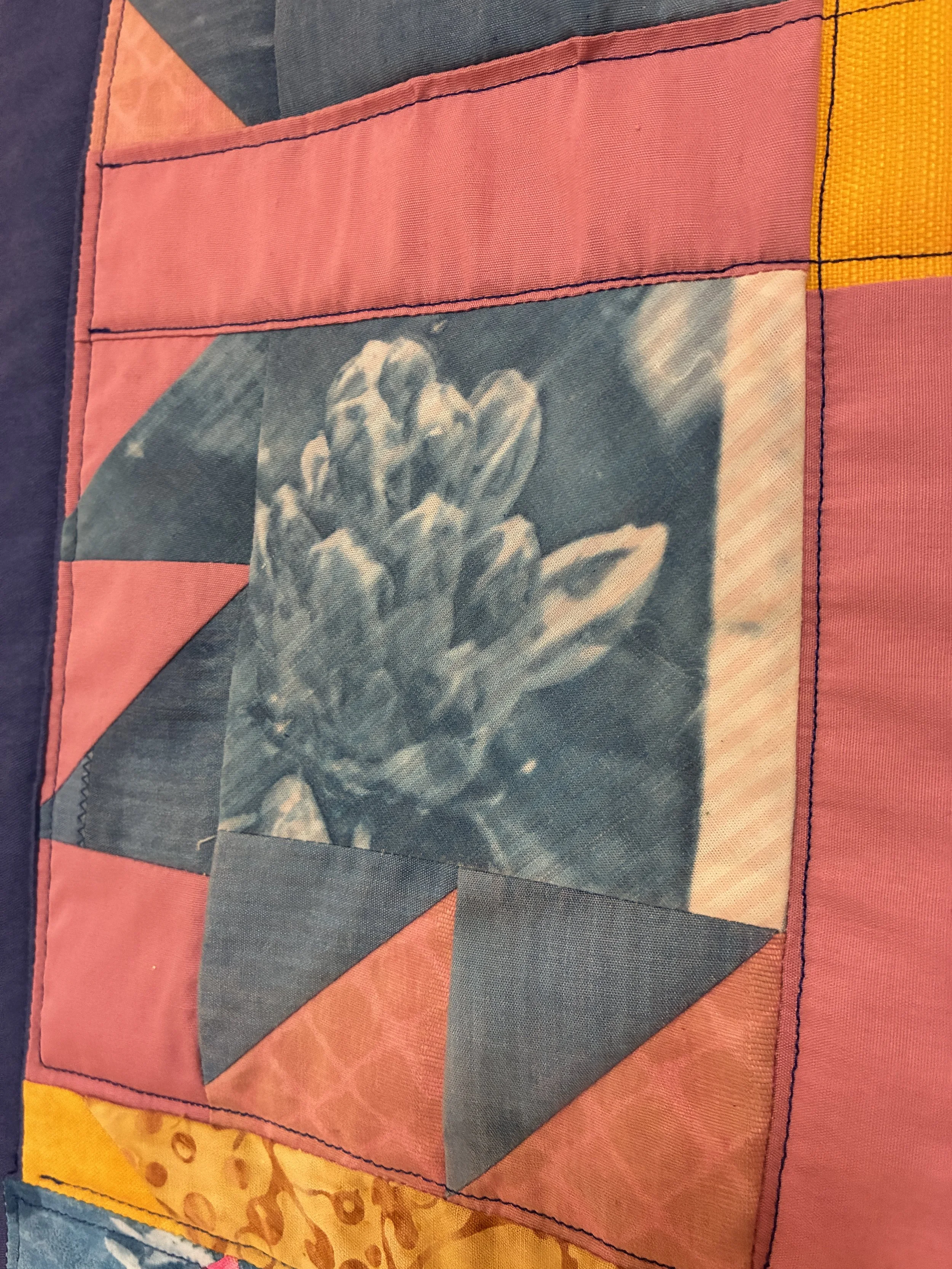
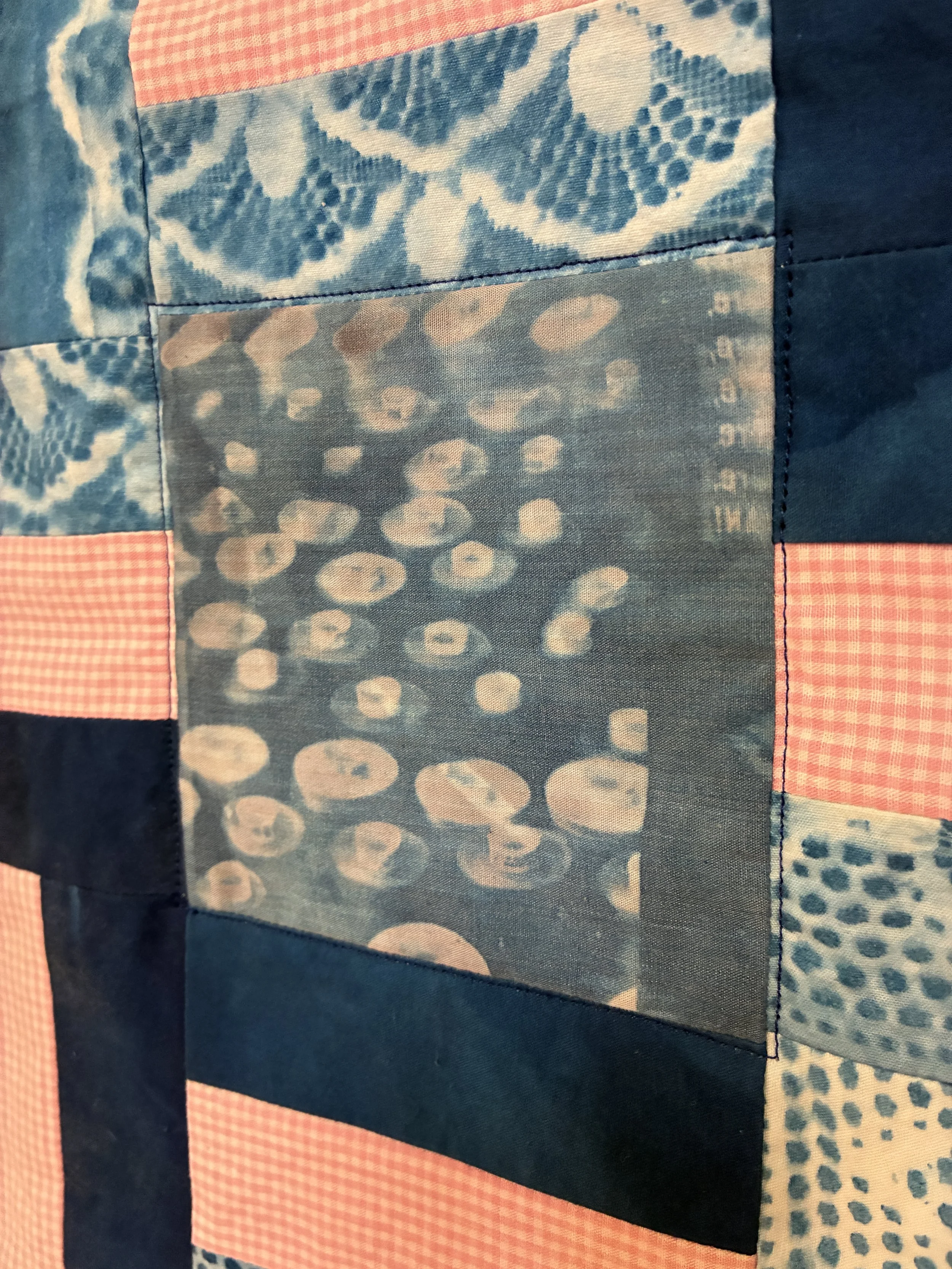
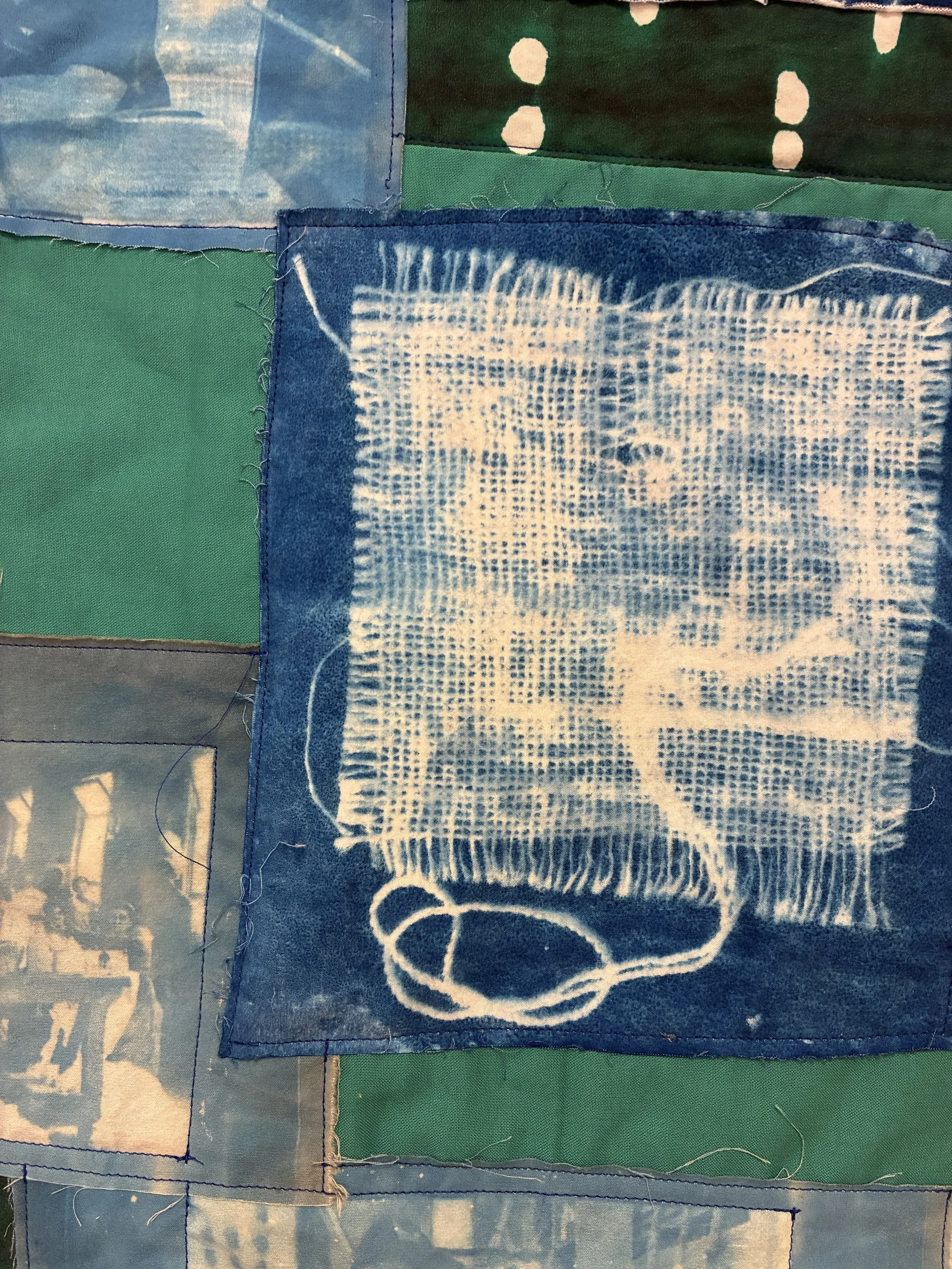
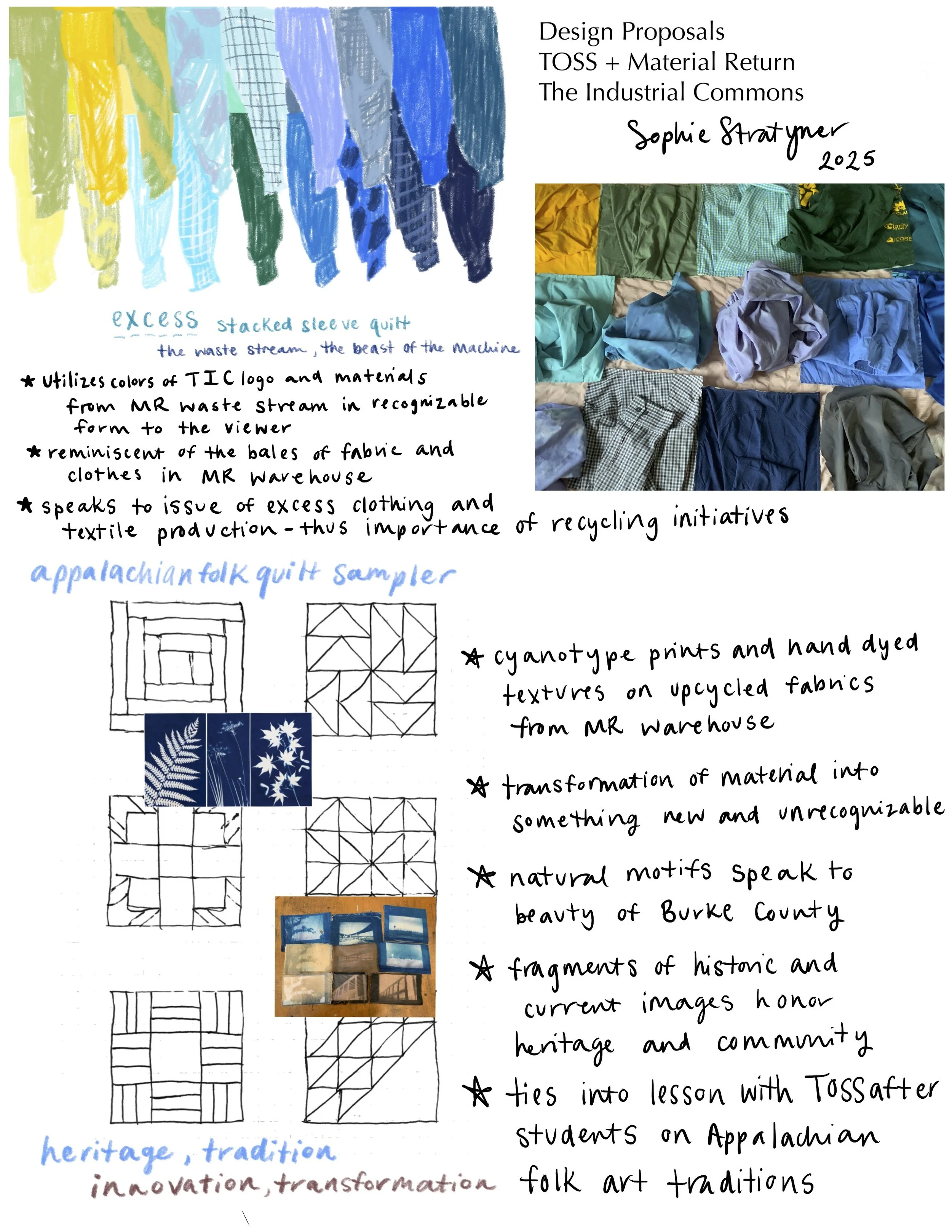
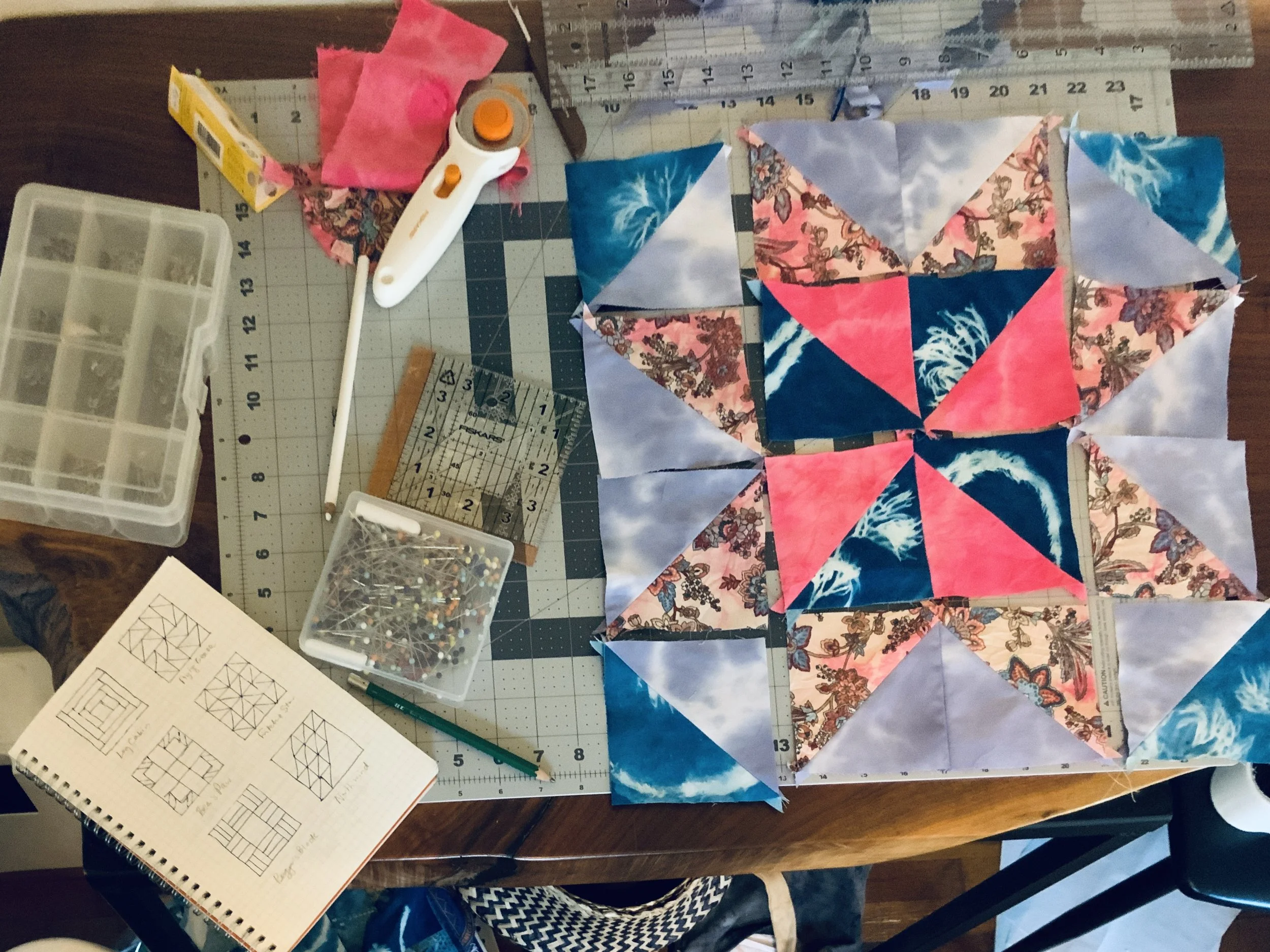
This sampler quilt transforms materials from the Material Warehouse completely, through dye, print, and simple cut and sew. Cyanotype motifs of the Eastern Tiger Swallowtail Butterfly, images of machinery and factory settings, and local ferns and club moss indicative of the Appalachian mountains are printed onto scraps of button up shirts, pillow cases, and discarded scraps of other quilters, which are incorporated into traditional American quilt blocks. Through this sampler quilt, I honor the tradition of quilting as an American folk art, while showcasing the transformative powers of material upcycling and recycling.
Workers in the Engine
Uupcycled cotton, cyanotype, thread
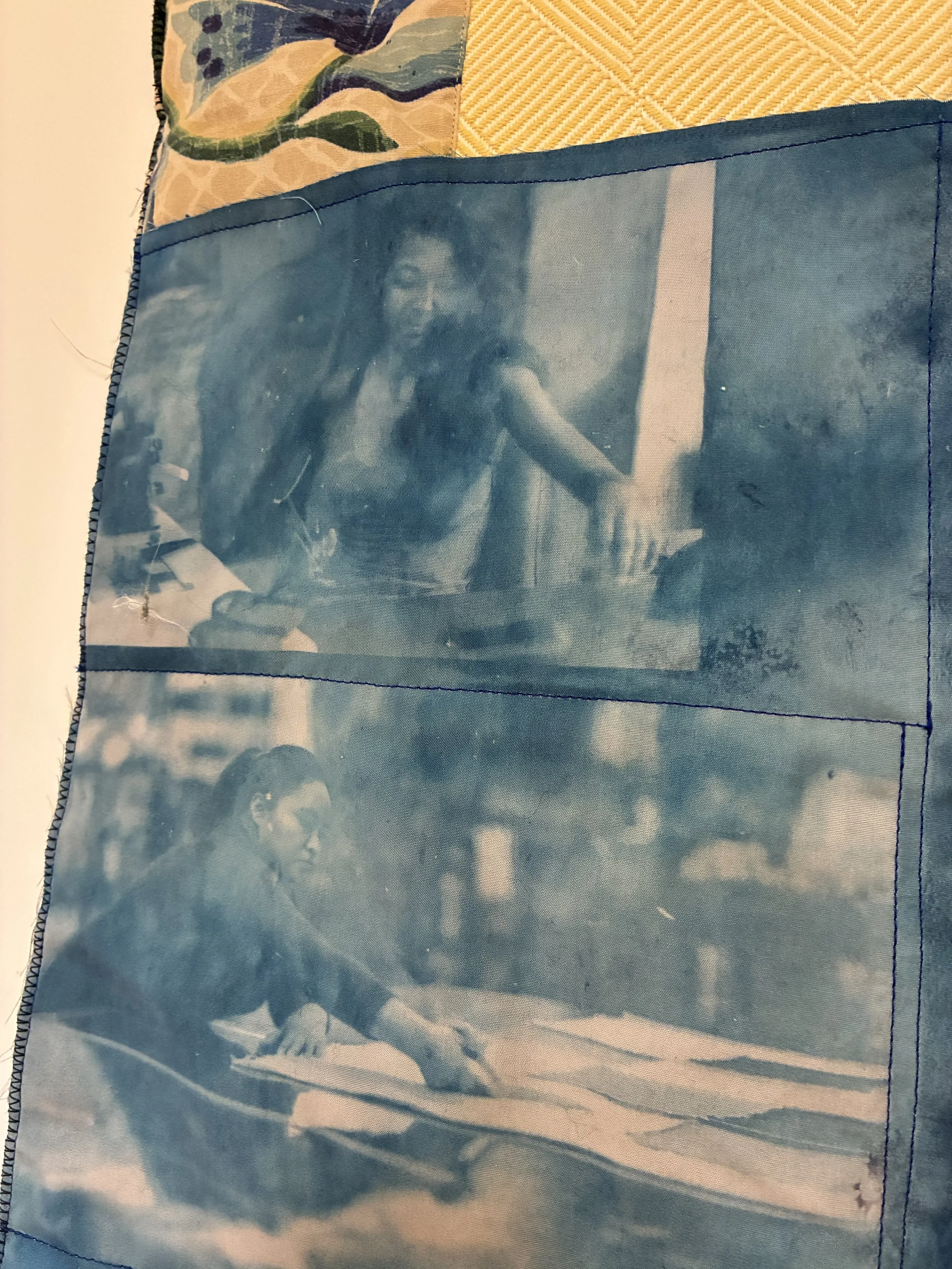
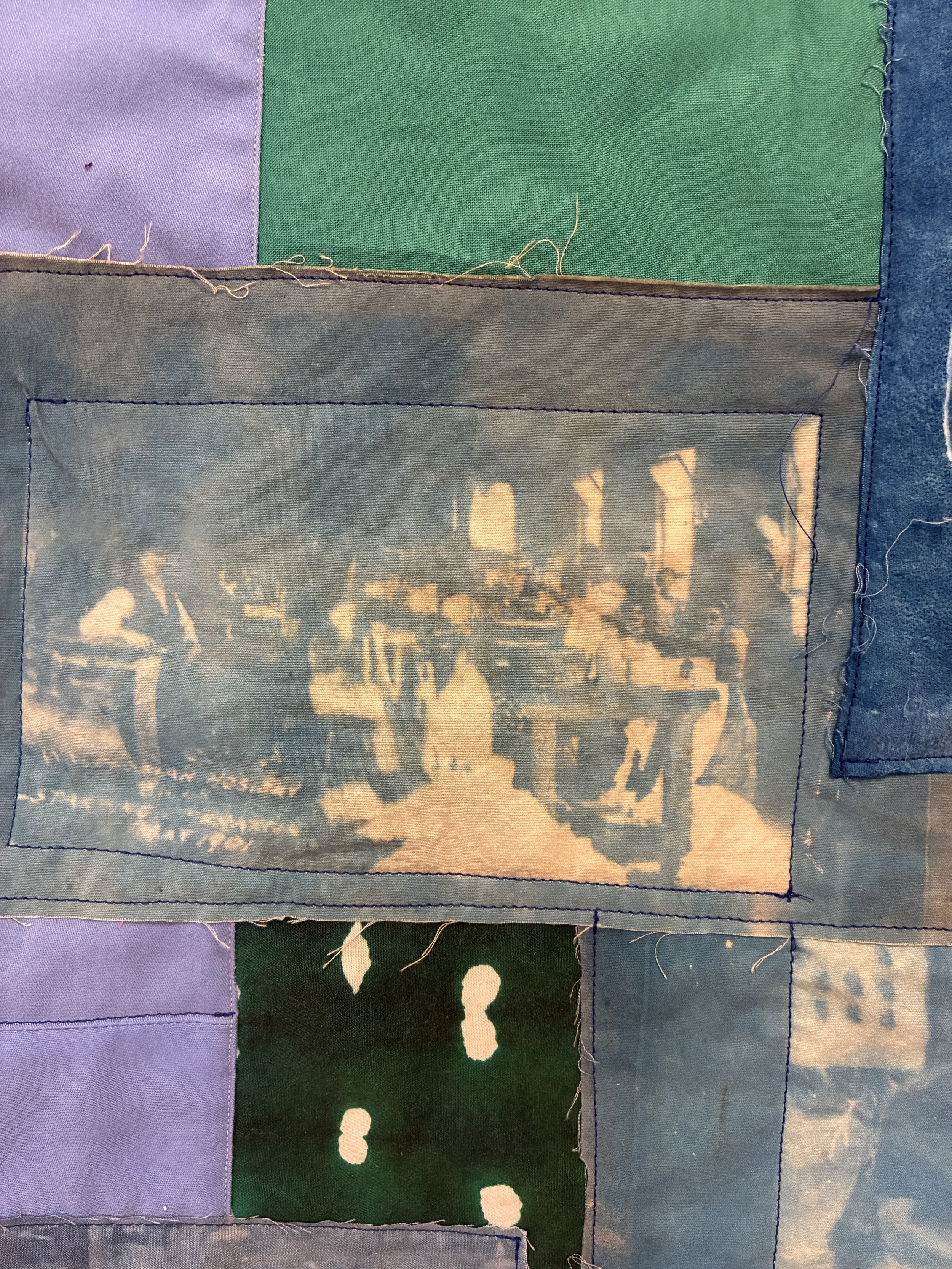
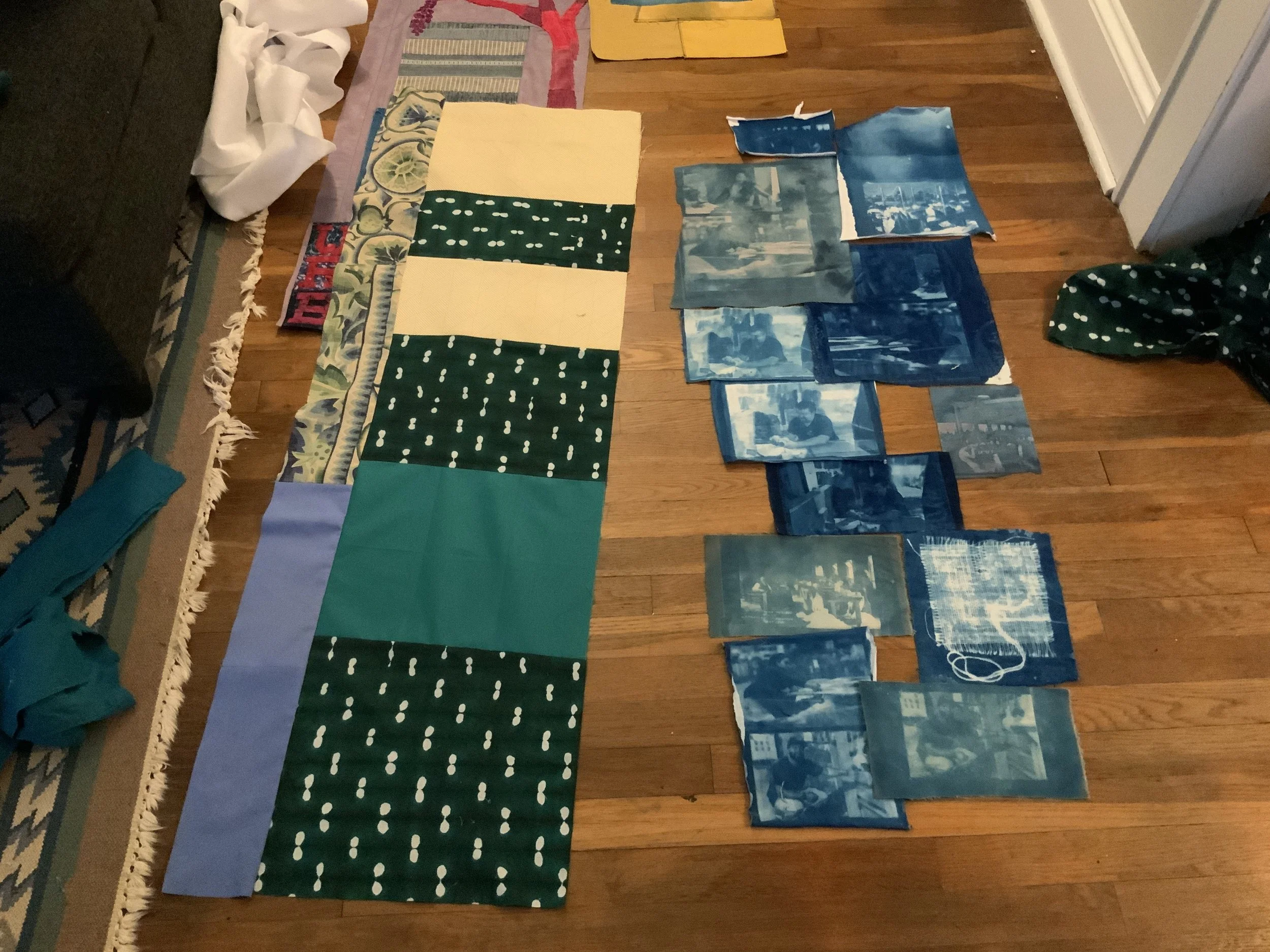
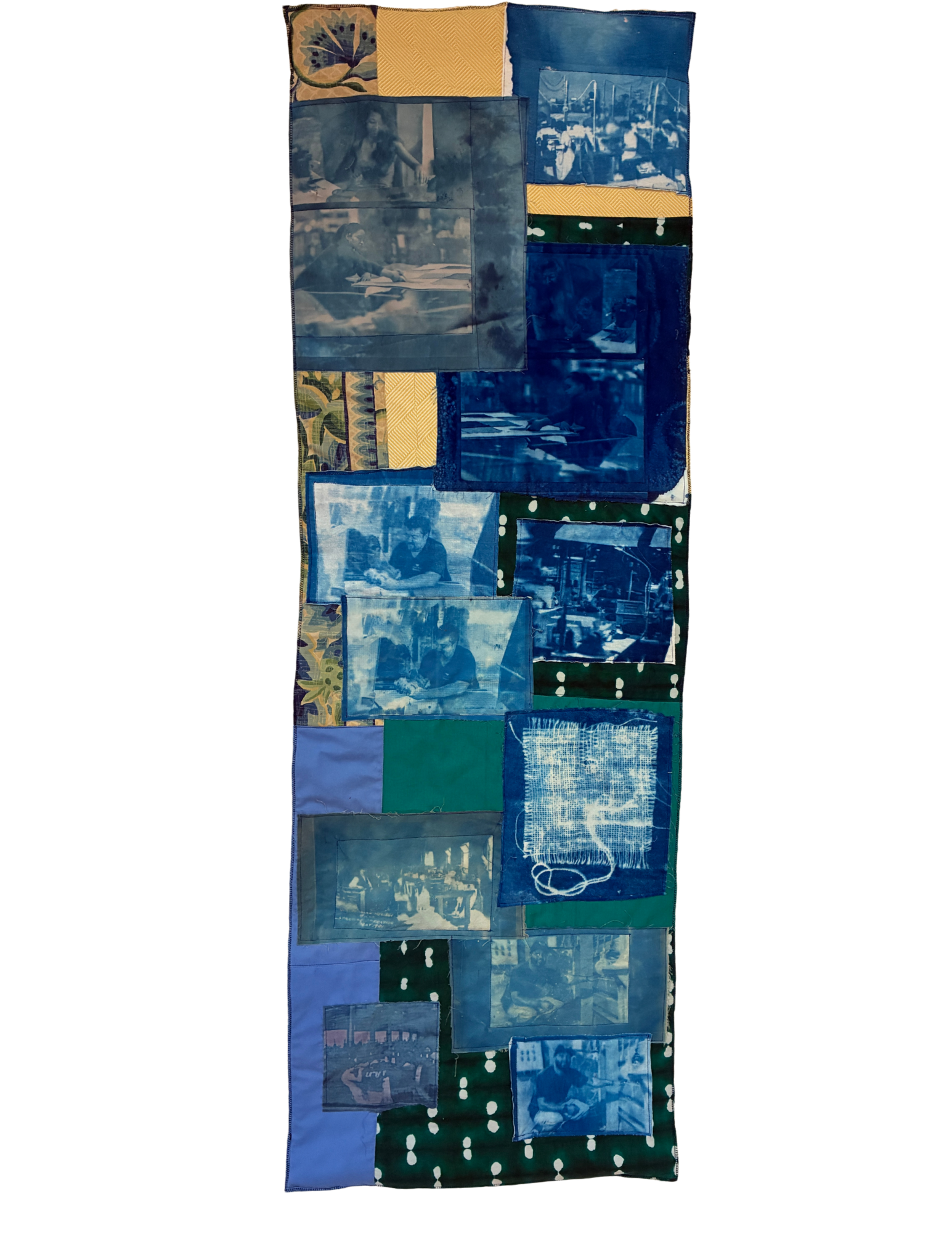
This cyanotype photograph fabric collage is a celebration of workers, past and present, in textile manufacturing and production. Pictures of workers in Morganton’s factories of the 1930s, 40s, and 50s, as well as before, such as an image of the Waldensian Hosiery plant in 1901, are courtesy of the North Carolina Room at the Morganton Public Library. Modern images include pictures of staff at Material Return, as well as other enterprises under the umbrella of the Carolina Textile District and Textile Engine ecosystem. Playful image layering and collage technique bring these images to life, showing us the past is still alive as we innovate, research, root in place, and move forward creating dignified and equitable conditions for workers in manufacturing.
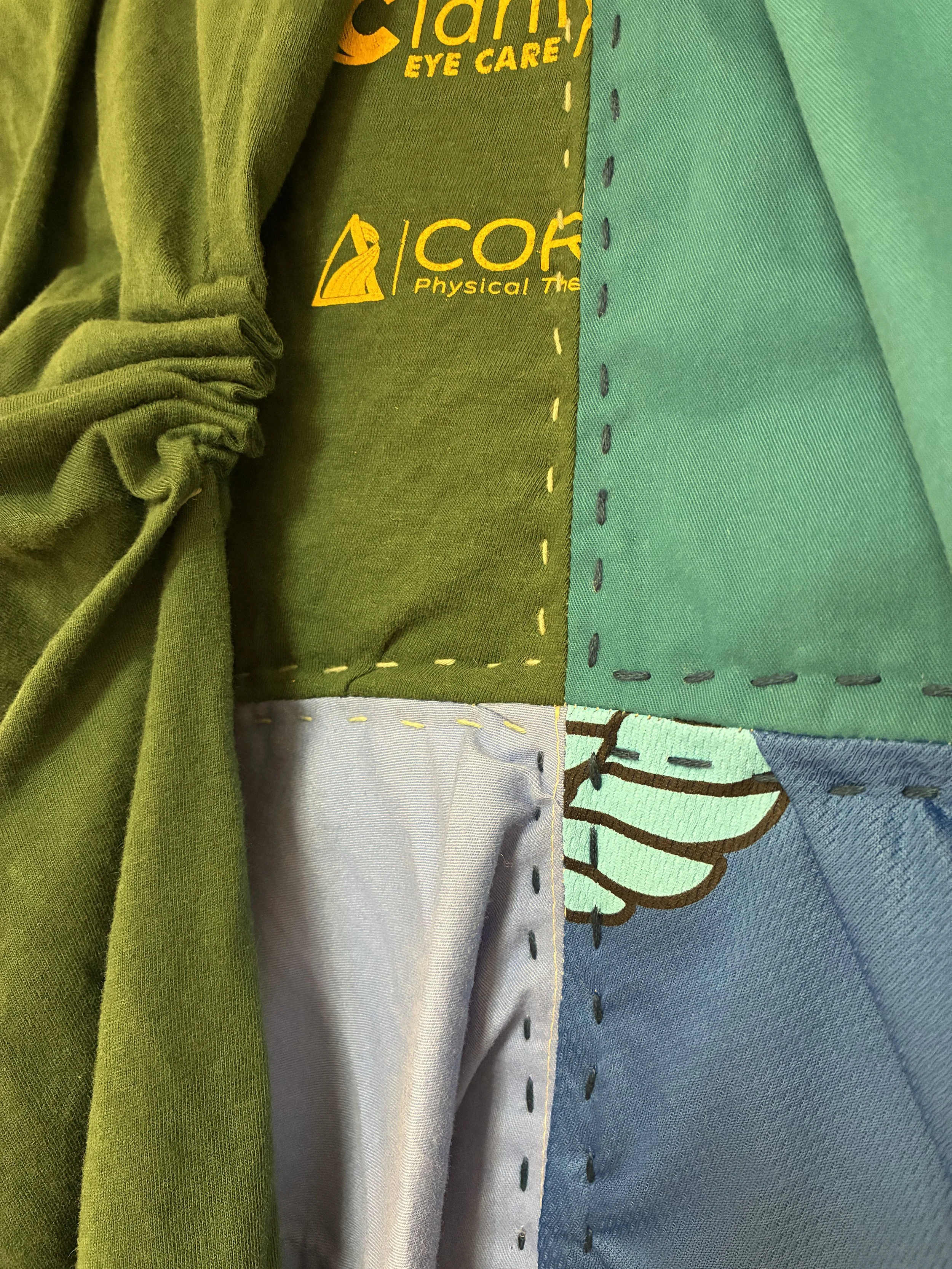
Side by Side
Men’s button ups and neckties, cotton thread
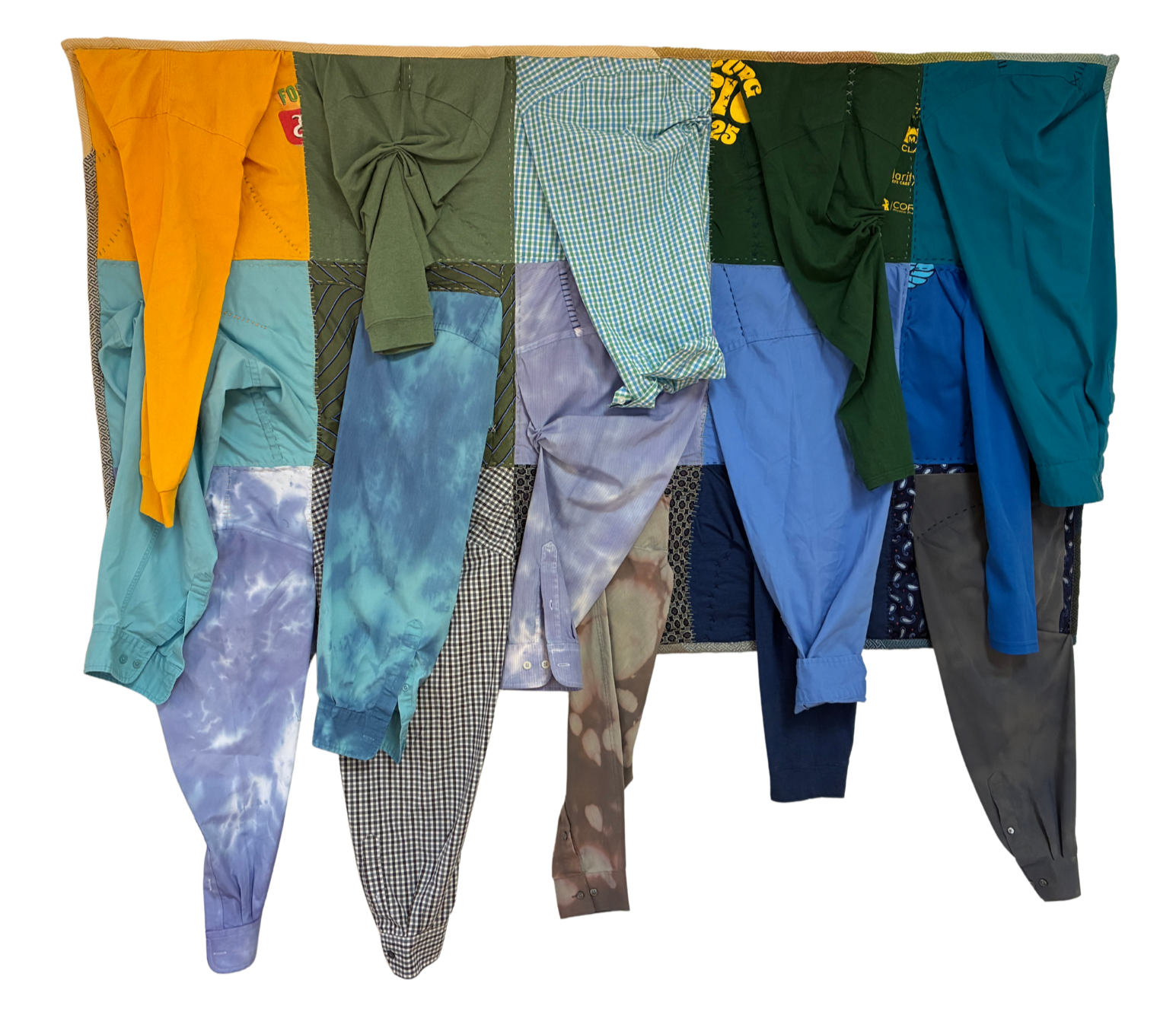
This quilt is inspired by the Material Return warehouse, with its bales of fabric and clothes awaiting the next part of the recycling process. While searching for materials to work with, I found a crate full of men’s button up shirts and neck ties. The colors are related to the colors of the Industrial Commons logo, and the drape of the sleeves is reminiscent of people standing side by side in solidarity. The drape of the sleeves draws the viewer in to this unconventional quilt.
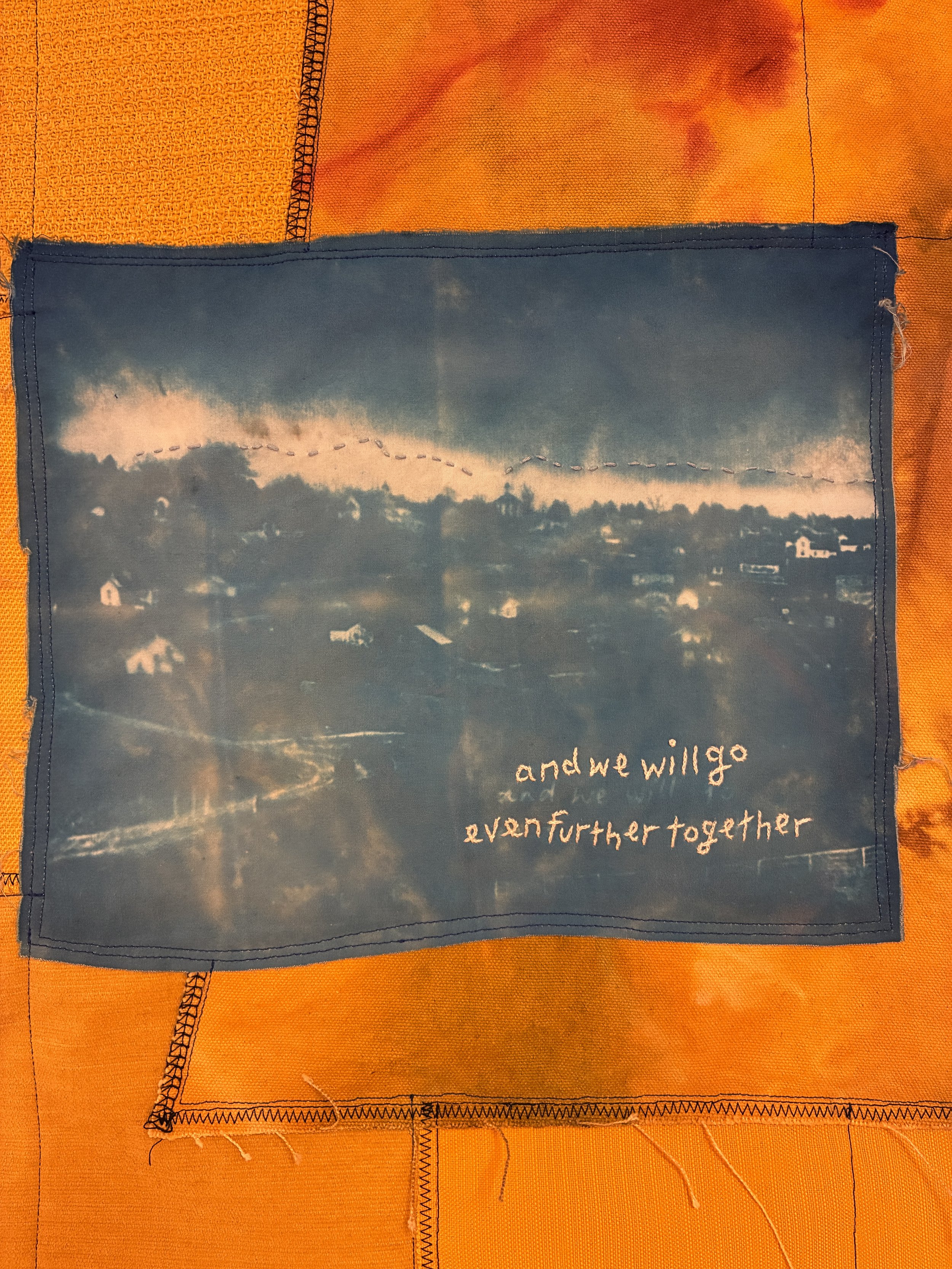
We Can Go Even Further Together
Upcycled cotton, cyanotype, thread
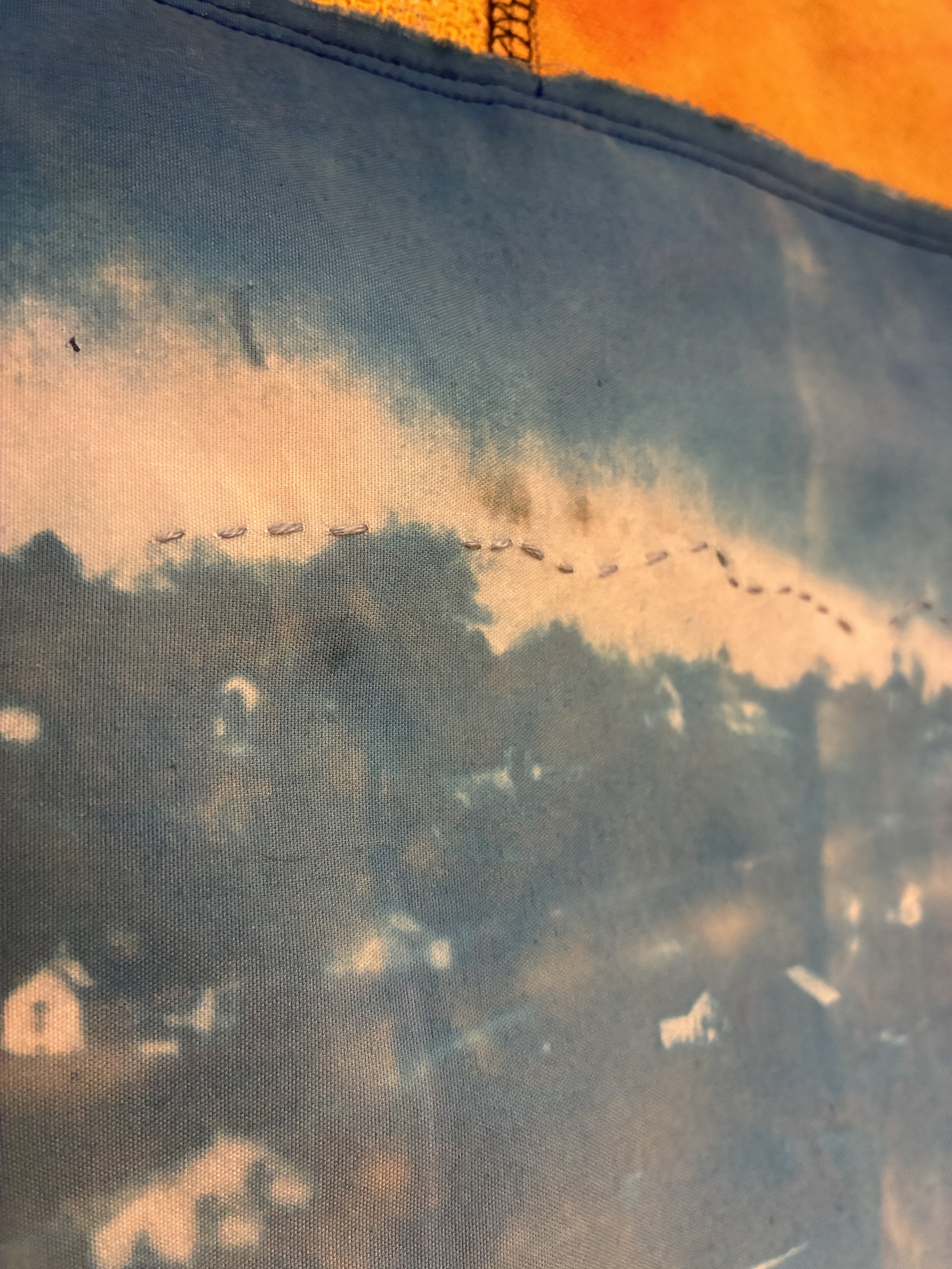
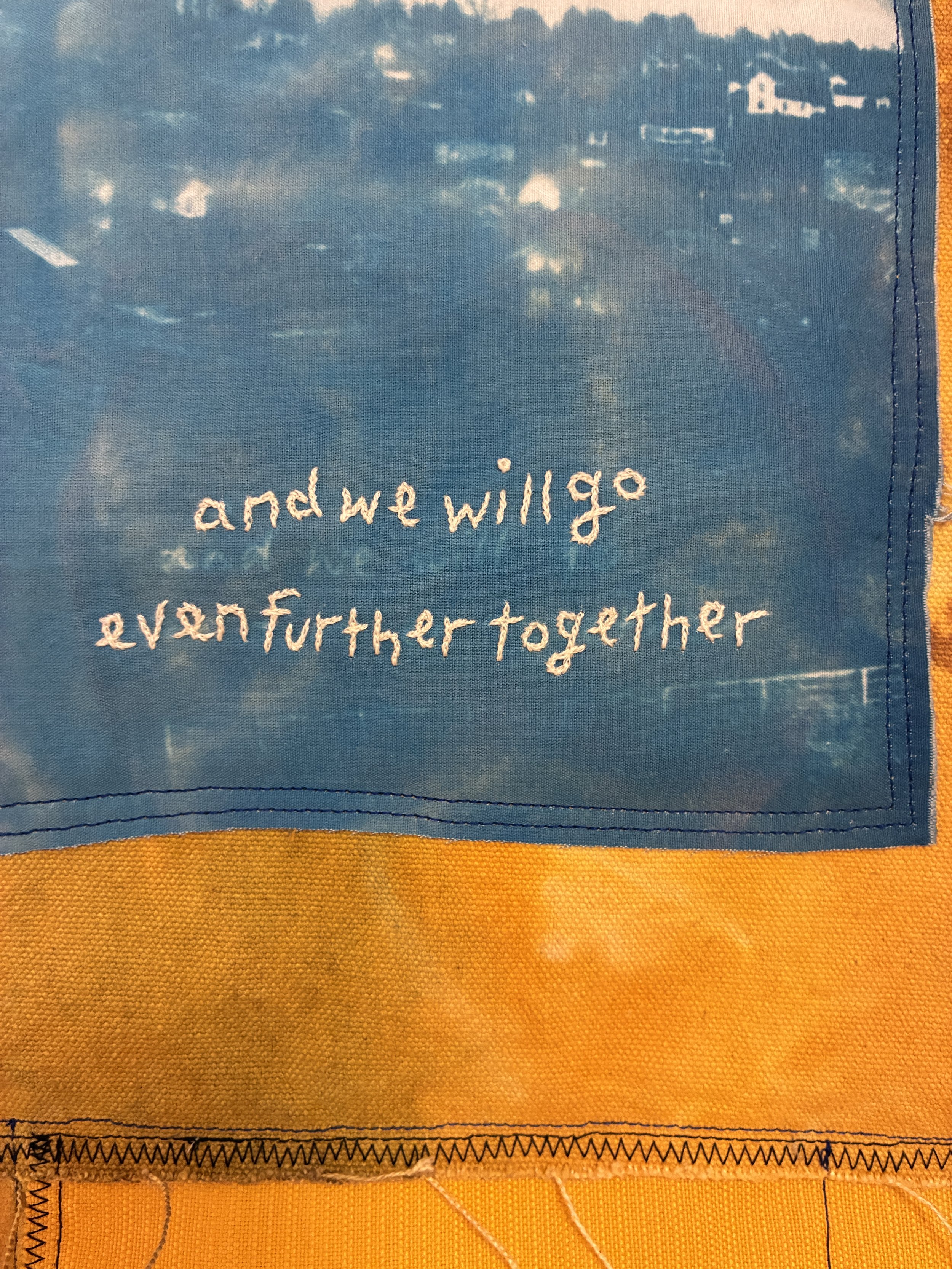
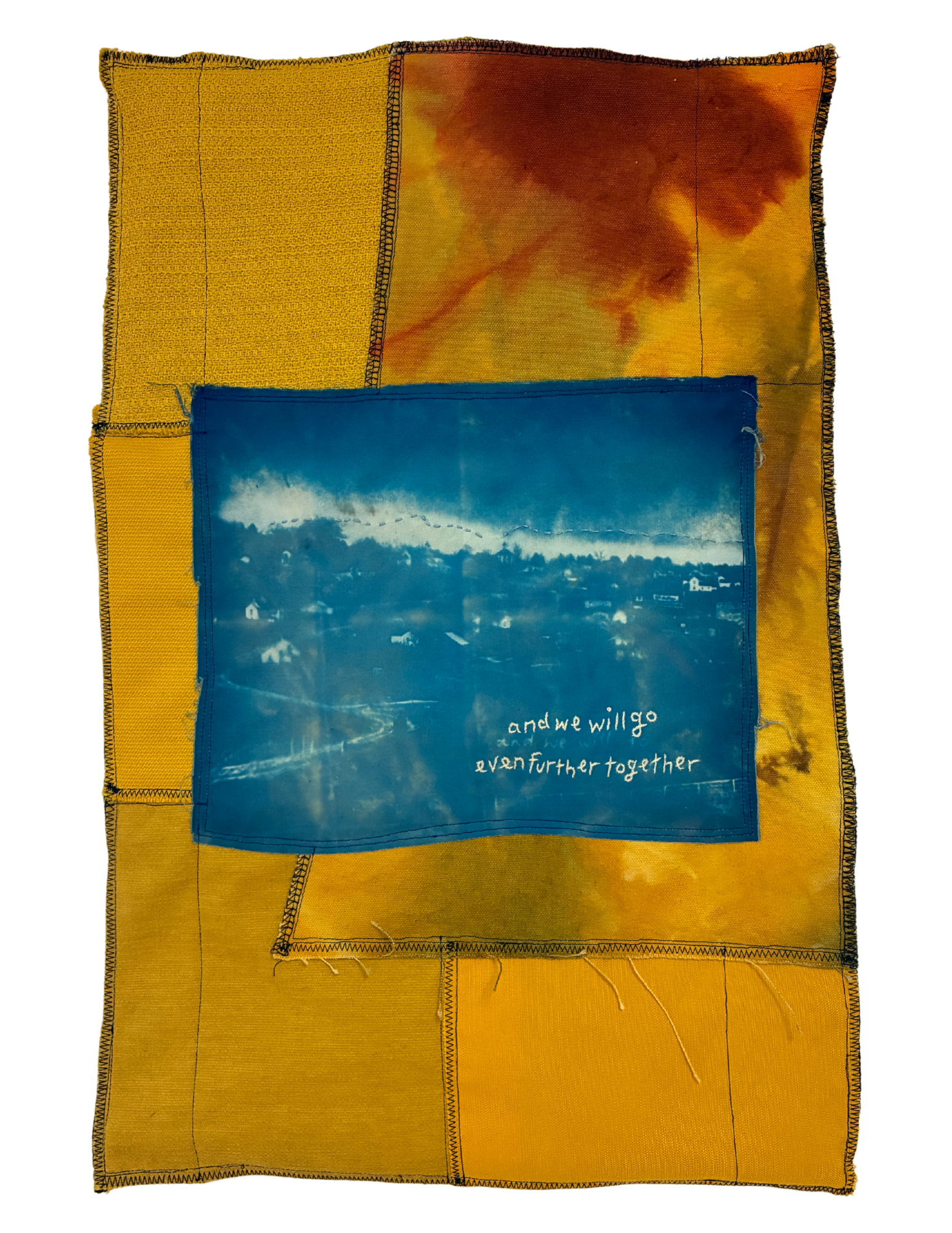
An image of Morganton, NC in the 1800s, rendered in cyanotype on cotton with embroidery lettering. The image is from the North Carolina Room at the Morganton Public Library. Thank you to curator Laurie Johnson for giving me access to the photos used in this project. This piece honors the heritage of Morganton and the work being done by The Industrial Commons to propel change and growth in the region.
Artist Statement
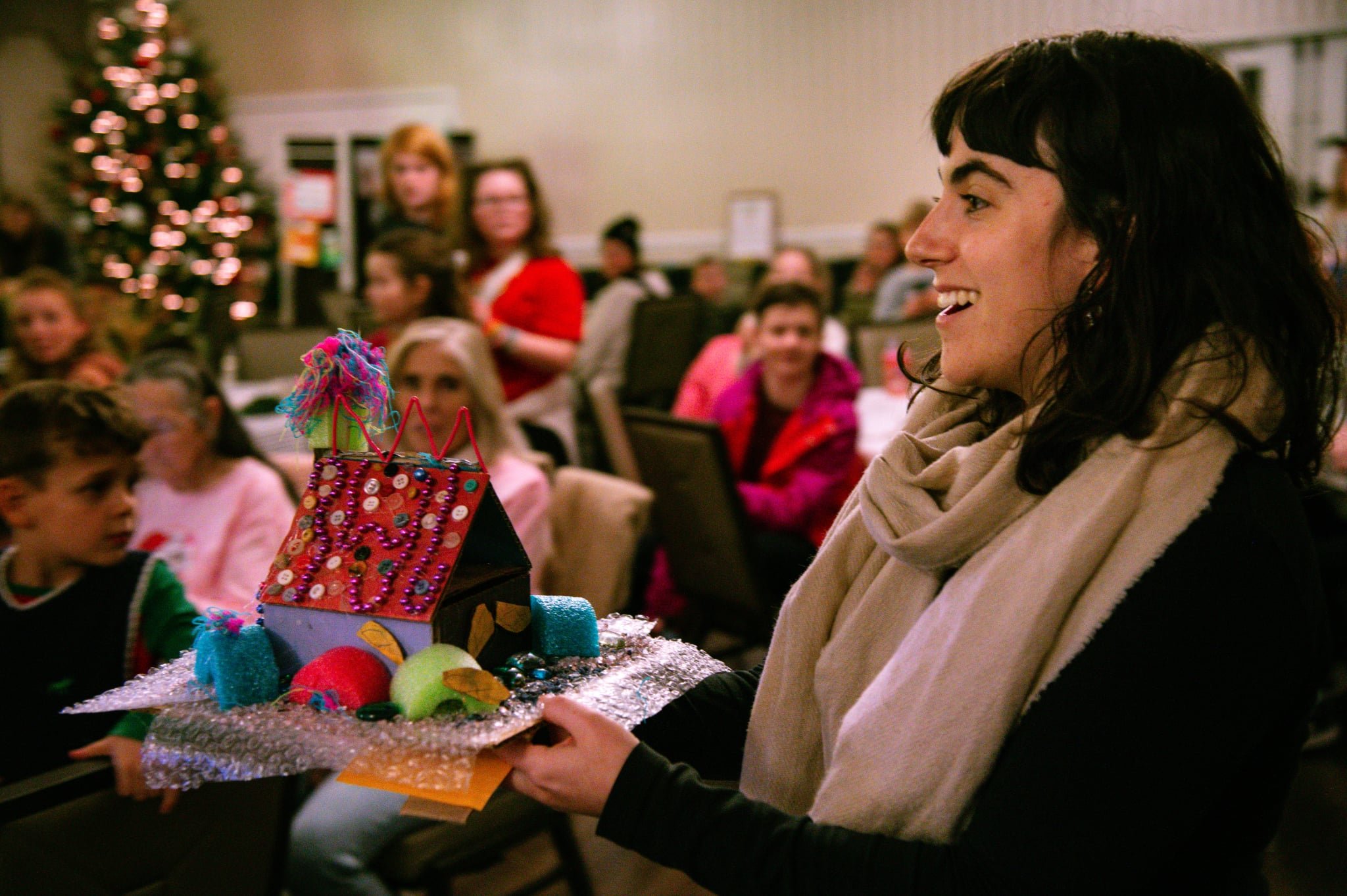
Sophie displaying a student art piece at the Winter TOSSing event. She participated as a judge for our annual upcycled student art competition.
The five works of art I created for the TOSS Air at TIC are a quilt made from shirt sleeves and neck ties, a sampler quilt of traditional American folk art patterns, and a series of three quilted fabric collages utilizing cyanotype printmaking as well as various quilting and embroidery techniques. These pieces serve as examples of reuse and transformation, while celebrating the heritage of Morganton and Burke County, and juxtaposing the manufacturing of yesterday with the work being done by Material Return and The Industrial Commons to propel sustainable and equitable manufacturing systems forward.
I was inspired by my tour of the Material Return warehouse with Bolek, the director of operations, and the research I did on the area; going to the Burke County History Museum and seeing examples of beautifully ornate furniture, accessories like pantyhose, and fashionable vintage clothes, as well as walking and hiking around the area. I was able to access a wealth of old photos of Burke County thanks to Morganton Public Library curator Laurie Johnson, and pictures of today’s textile workers in the Material Return warehouse and the Textile Innovation Engine’s partners after meeting with Catherine Armstrong, a program manager within the engine. All of these connections and experiences informed the work. All of the fabric utilized in my pieces was taken from the Material Return warehouse.
Details